

ISSN: 3005-8198 (online) | 3005-818X (print)
Volume 3, Issue 4 (October - December 2025) Pages 1-11
 Research Article
Department of Civil Engineering, Nile University of Nigeria, Abuja, Nigeria.
The construction sector is responsible for a significant volume of waste, largely attributable to inadequate resource management in building projects. This study explores the management of construction waste in the Federal Capital Territory (FCT), Abuja, Nigeria, from the perspective of consultants. The investigation utilizes a structured questionnaire as a methodological instrument. The responses were then subjected to analysis using IBM-SPSS version 26 software and evaluated on a Likert scale ranging from 1 to 5. The Relative Importance Index (RII) was computed with Microsoft Excel to assess the relative importance of the factors in question. The findings of the study revealed a total of 17 factors contributing to wastage issues; however, RII pinpointed the top 10 most crucial factors related to waste causation issues. The mean score for Poor Materials Handling and Storage was 4.57, according to the analysis results obtained. Pearson product correlation analysis revealed a correlation between designers and complicated design, specifically within the technical factor category, indicating statistical significance in this area. No significant correlations were identified within sections such as management factors, worker factors, and external factors. The findings of the present study demonstrate that the implementation of a quality management system has the potential to reduce construction waste, thereby contributing to the development of a sustainable built environment in construction projects.
Keywords: Causative Factors; Construction Waste; Sustainability; Quality Management; Waste Management.
The construction sector is responsible for the generation of substantial volumes of waste, primarily attributable to the suboptimal management of resources during the development of building projects. While it continues to function as a primary catalyst for economic growth, it is also implicated in the accelerated deterioration of the environment, a consequence of the rising volumes of waste generated during construction operations (Abdullahi et al., 2019). The amount of waste produced is consistently rising due to factors such as population expansion, individual lifestyle preferences, consumption habits, and advancements in technology (Obianyo et al., 2024). Construction waste can be categorized into three distinct classifications: materials, labor, and machinery. Material waste, the most prevalent type of waste in construction, comprises items deemed unfit for construction purposes and are consequently discarded (Obianyo et al., 2025, 2026). A construction project site is said to be managed properly when materials are used efficiently and the quantity of waste generated is reduced (Ushie et al., 2024). Garba et al. (2016) described material waste in construction as referring to items that do not add value to the project. This is acknowledged as a significant industry challenge because of the adverse impact of such waste. The efficacy of quality management in reducing waste is contingent upon the early detection of flaws and the efficient execution of operations (Olawade et al., 2024). A wide array of waste management techniques has been identified in the extant research, including recycling, incineration, composting, landfilling, open dumping, burning, reusing, shredding, and pyrolysis(Ghisellini et al., 2016; Rahman & Alam, 2020; Roy et al., 2022).
In developing nations, rapid economic growth often precipitates substantial construction activity, resulting in a concomitant generation of significant amounts of construction waste. However, these countries frequently exhibit a deficiency in the requisite expertise to effectively manage construction projects. This deficiency is exemplified by the presence of incomplete regulations, outdated technologies, and a lack of awareness, which collectively impede their capacity to manage the substantial volumes of waste generated during construction (Bao, 2023). Consequently, developing nations often encounter substantial environmental degradation, impeding their advancement toward advanced economies in a sustainable manner. Therefore, there is an urgent need to implement circular practices for construction waste in emerging economies to create a sustainable built environment.
In recent years, there has been a growing global awareness of sustainability issues, with a particular focus on reducing construction waste and enhancing environmental performance. The Quality Management System (QMS) has been identified as a means to minimize waste through improved processes, performance, and the project lifecycle (Alawag et al., 2025; Okonta et al., 2024; Oyewole, 2022). The engagement of stakeholders and its subsequent enhancement of quality management in construction projects plays a useful role in promoting efficient and effective waste management and sustainable construction (Yuan et al., 2018). The implementation of sustainable quality management techniques is contingent upon the involvement of consultants (McLeod & Schapper, 2024; Riaz et al., 2023).
Furthermore, earlier studies have also focused on investigating the relationship between quality management and waste. For instance, a study by Meye et al. (2022) concluded that the implementation of quality management systems in a firm can facilitate the management of material waste through the implementation of quality control measures. Concurrently, Emeka (2019) observed that quality control checklists are instrumental in minimizing errors and reducing waste during construction processes. Nonetheless, the issue of construction waste persists in developing countries, primarily due to two factors: the scarcity of resources and the substandard or non-compliance with quality standards (Anokye et al., 2024; Rogers Simeon et al., 2024; Shahid & Ali, 2025).
Moreover, extensive research has demonstrated that Nigeria is not unique in facing challenges such as inadequate implementation, a shortage of skilled labor, and ineffective regulatory instruments (Akinola, 2023; Obianyo et al., 2021). A survey of major construction companies in Nigeria was conducted by Abdullahi et al. (2019) to ascertain the state of quality management systems (QMS) implementation. The results indicated that while a significant number of large firms have adopted QMS, many small firms appear to lack clear directives on how to enhance their standards. These discrepancies have resulted in the generation of substantial amounts of construction waste. In a similar vein, Ahaotu and Pathirage (2015) underscored the necessity for construction teams to adopt enhanced leadership strategies to foster an overarching culture of quality management.
A broad investigation into the application of quality management in the reduction of construction waste necessitates the utilization of various theoretical approaches for the examination of the principles and their corresponding mathematical formulations. A prominent theory in the field of organizational excellence is Total Quality Management (TQM), which emphasizes the enhancement of organizational quality and customer satisfaction through the implementation of quality control mechanisms. It is imperative to acknowledge that the TQM discipline facilitates the mathematical modeling of quality through the utilization of statistical process control (SPC) charts. This process entails the assessment and control of the quality of construction processes (Rogers Simeon et al., 2024).
An additional domain in which the principles of Lean Construction find application is the process of minimizing waste. The primary techniques employed by lean theory encompass mathematical optimization, given that the objective of lean theory is to provide maximum value for the minimum amount of waste. For instance, Lean employs Value Stream Mapping (VSM) to analyze and optimize construction processes, with the objective of identifying and eliminating non-value-added activities (Yuan et al., 2018). VSM can be measured and quantified by key parameters such as cycle time and throughput, which permit the recognition of problems.
The Theory of Constraints (TOC) posits that all systems invariably possess at least one bottleneck, a factor that invariably leads to system slowdown. The implementation of TOC in construction management facilitates the utilization of mathematical models for the analysis of constraints, including time-related constraints. This approach assists in delineating areas necessitating attention to optimize the impact of quality management practices on waste minimization and project enhancement (Meye et al., 2022).
Furthermore, the potential incorporation of a systems dynamics perspective into QM analysis has been identified. This approach utilizes differential equations to model the interdependencies of various elements of building undertakings, such as the quantities of used materials, the efficiency of labor, and the volume of produced waste. These tools assist construction managers in predicting outcomes, facilitating the implementation of optimal strategies for waste minimization (Abdullahi et al., 2019).
Consequently, the pursuit of quality management through the implementation of TQM, Lean Construction principles, TOC, and systems dynamics constitutes a robust theoretical framework to enhance comprehension of how to minimize construction waste. These theories provide mathematical instruments and modeling approaches that enhance the improvement of construction procedures, thereby promoting sustainable construction procedures.
The objective of sustainable construction is to mitigate the ecological impact of construction-related activities by conserving resources and reducing waste (Bamisaye et al., 2025; Otoekhile Jonathan et al., 2012; Shajidha & Mortula, 2025). The implementation of quality management initiatives has been demonstrated to facilitate sustainable objectives by means of reducing waste, conserving resources, and enhancing project outcomes (Hajam et al., 2023). Consequently, consultants, as significant stakeholders, can make substantial contributions to quality management initiatives and ensure that projects adhere to quality standards (Ogunde & Ayedun, 2018; Richard et al., 2017).
The objective of this research is to ascertain how quality management mitigates construction waste from the perspective of construction consultants. The objective of this study is threefold: first, to describe effective waste management practices; second, to reveal the difficulties consultant encounter; and third, to assess the significance of quality management to sustainability. The succeeding sections of this document expound on the theoretical framework and research methodology, the results of the study, and the implications of the findings for enhancing sustainability in the construction industry of Nigeria.
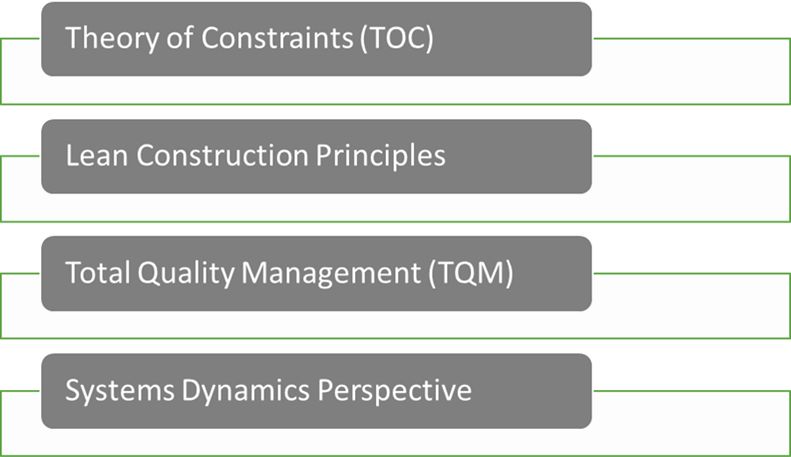
Figure 1. Theoretical Approaches of the Study
The research methodology entails an exhaustive examination of consultants’ perspectives on quality management in minimizing construction waste for sustainable built environments. The objective of this study is to obtain valuable insights into consultancy practices, waste reduction strategies, and the integration of quality management for achieving sustainability goals in construction projects through qualitative interviews and data analysis. Additionally, the study aims to provide a comprehensive understanding of how consultants perceive and utilize quality management practices to minimize construction waste, contributing insights towards a more sustainable built environment from their unique professional standpoint.
The study was conducted in Abuja, Nigeria’s Federal Capital Territory. Abuja is distinguished by its substantial and accelerated development of building projects, particularly those related to government, commercial, and residential structures. As a young and expanding metropolitan area, it offers opportunities to observe construction practices and industry dynamics. This is an important factor that reinforces the notion that studying the impact of implementing quality management on cutting construction waste and enhancing the sustainability of constructions is relevant in this area. Abuja offers a wide range of perspectives on the strengths and weaknesses of implementing quality management in construction due to its numerous ongoing construction projects. The present study examined two private construction firms, namely DADA Construction Services Limited and GILMOR Construction Company, as well as one government agency, the Federal Road Maintenance Agency (FERMA). These companies and FERMA are responsible for the major construction activities within Abuja.
The present study employs a qualitative research design to investigate the subjective experiences, opinions, and expert insights of consultants in the construction sector. The qualitative approach facilitates a comprehensive understanding of the intricate nuances and multifaceted aspects underlying the relationship between quality management practices and the minimization of construction waste from the unique standpoint of consultants. A purposive sampling technique will be employed to select participants, targeting consultants with extensive experience and expertise in construction quality management. The sample will encompass a diverse range of consultants from different specialties and roles within the construction domain to ensure varied perspectives and comprehensive data collection. This method involves systematic identification, organization, and interpretation of recurring themes and patterns in the data. This process enables the extraction of meaningful insights and emerging trends concerning the role of quality management in waste reduction from the consultants’ viewpoint.
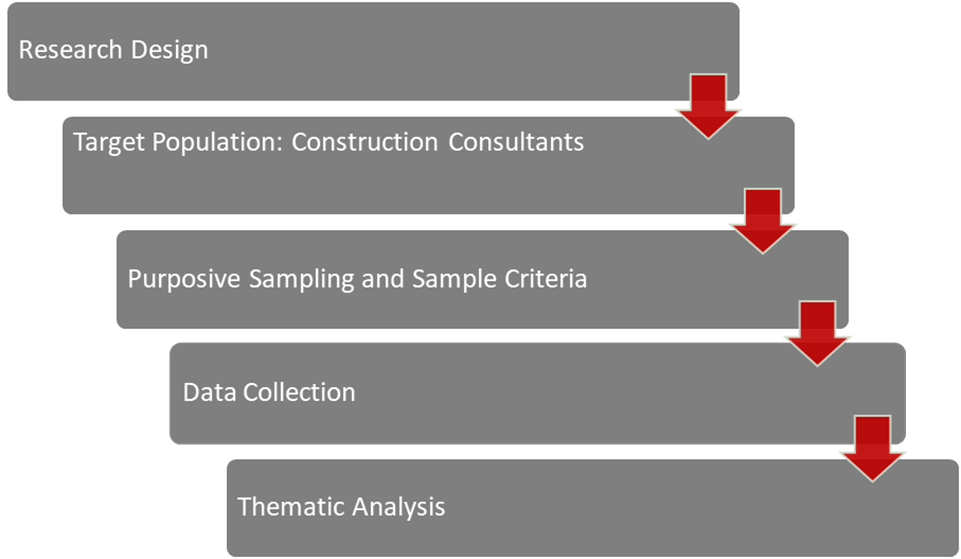
Figure 2. Research Design Flowchart
The present study employed a purposive sampling technique that targeted consultants with extensive experience in the domain of quality management within the construction sector. According to the action interview, consultants were selected at random from various professional roles, including project managers, engineers, contractors, and quantity surveyors. This diversity contributed to the acquisition of a more comprehensive understanding of field research on quality management in the context of avoiding construction waste.
The stratified sampling technique was employed to ensure an unbiased and representative selection of participants for the survey. Initially, a list of 200 registered construction firms was obtained to constitute the population. The sample size was computed using Fisher’s formula (Equation 1) to establish the value of ‘n’, and then Equation 2 was applied to determine the final total sample size. The latter was accurately calculated for this study and is shown below:
A structured electronic questionnaire was administered to consultants to collect pertinent data. The Likert scale, ranging from 1 (strongly disagree) to 5 (strongly agree), was utilized to assess the causative factors of waste. The questionnaire was designed to ascertain the frequency with which the identified factors manifested on a construction site and the extent to which they constituted a problem. The initial distribution of these surveys will be conducted electronically. The survey will be sent to all 132 participants using their formal email addresses or by direct phone contact, depending on the available contact details. The project manager and consultant interviews will be crucial in evaluating managerial and consultancy procedures, as well as aspects of the adopted construction plan.
The objective of the questionnaire is to identify waste compositions and assess the comprehension of quality management in handling construction waste disposal among local firms in Nigeria’s construction sector. Additionally, the objective is to gather data that may not be addressed in the interviews. The subsequent interviews with expert consultants, both domestic and international, will delve into the salient issues that were highlighted by the results of the questionnaire. Six semi-structured interviews will be conducted with consultants experienced in the construction sector. The objective of the present questionnaire survey is to investigate the capacity of indigenous firms for and their understanding of quality management, with the aim of minimizing construction waste within Nigeria’s construction industry.
The implementation of distributed questionnaires is intended to solicit feedback concerning construction waste management practices, utilizing a 1 to 5 Likert scale. The responses will undergo qualitative analysis using SPSS software, following the delineated steps.
A subsequent analysis is necessary to ascertain the total response frequency and percentages, as well as to evaluate the correlation of responses. This will facilitate the interpretation of results, the formulation of conclusions, and the creation of recommendations.
The Relative Importance Index (RII) was calculated using Microsoft Excel to determine the relative significance of each waste factor. The RII was determined by normalizing the collected data and assigning weights based on participant responses. The IBM Statistical Package for Social Sciences (SPSS) software was utilized to compute response frequencies, percentages, and means. Pearson’s correlation analysis was implemented to assess the linear relationships between variables, while Chi-square analysis was conducted to interpret multivariable association.
The distribution of responses by specific specialization and working experience offers valuable insights regarding the workforce in the construction sector and its attitude toward waste management issues. The contractors constitute a minority of the sample, representing 28.6% of the total. Conversely, the responders in the engineering category comprise the largest group, with 42.2% of the sample. Consequently, engineers are likely to be involved in construction waste management studies, as they are the principal technical and supervisory professionals on the construction site (Table 1). Among the respondents who contributed to this project, 20.3% are project managers, and 9.4% are quantity surveyors, which evidences a high level of management and financial input here. This finding aligns with the observations made by Oyewole (2022), who acknowledged the significance of multidisciplinary contributions in reducing construction waste.
With regard to work experience, quantitative data underscores the depth and breadth of respondents’ practical experience. The largest group (40.6%) has 11–15 years of experience; thus, the subjects of the study can be referred to as mid-career employees with further practical experience. This level of experience is crucial, as experts in this category must have observed changes in waste management practices over time. Consequently, they are better positioned to offer reasonable information (Emeka, 2019). However, a couple of more unconventional positions are represented by respondents with 1-5 years of experience (26.6%) and 16-20 years of experience (18.8%). These findings align with the observations of previous researchers who emphasized that diversity in experience fosters comprehension of issues within the construction industry, such as waste management and operation optimization.
| Factors | Frequency | Percent (%) |
|---|---|---|
| Specialty | ||
| Contractors | 37 | 28.6 |
| Engineers | 54 | 42.2 |
| Project Managers | 26 | 20.3 |
| Quantity Surveyors | 12 | 9.4 |
| Work Experience (years) | ||
| 1 - 5 years | 34 | 26.6 |
| 11 - 15 years | 52 | 40.6 |
| 16 - 20 years | 24 | 18.8 |
| 6 - 10 years | 19 | 14.8 |
The mean scores pertaining to the factors that contribute to construction waste generation in Abuja are presented in Table 2. The findings indicate that the most severe problems were the improper disposal of waste and inadequate site supervision, with mean values of 4.39 and 4.03, respectively. Consequently, these results suggest a significant absence of research on contemporary management practices, a finding that aligns with the observations reported by Oyewole (2022) and Yuan et al. (2018). These researchers proposed the enhancement of human resource training and the implementation of a quality management system. While the substandard management and storage of materials have been identified as a contributing factor to the mean score of 4.57, it is equally evident that the quality assurance in the management of waste poses a substantial threat. In addition, as supported by the findings of Emeka (2019) and Meye et al. (2022), it can be posited that quality control plays a pivotal role in enhancing effectiveness and establishing sustainability.
Furthermore, the results of the study indicate that technical factors, including frequent design changes (mean score=2.65), inexperienced designers (mean score=2.53), and poor design quality (mean score=2.03), contributed significantly to construction waste accumulation. However, these factors were comparatively minor contributors. This phenomenon aligns with the findings of Abdullahi et al. (2019), who determined that the challenges encountered in construction projects are predominantly design-related. The comparatively low mean scores for worker-related factors, including inadequate training, suggest that while these factors contribute to waste, they are not as significant an issue as management-related factors. Consequently, there is an imperative to address the skills gap and enhance the training of workers to improve quality management and reduce waste, which is regarded as a pivotal culture to be adopted by industry players (Ahaotu & Pathirage, 2015). The findings of this study underscore the necessity for the development of programs that effectively integrate management and technical solutions. These initiatives are crucial in reducing the volume of waste and addressing the escalating unsustainable practices within the construction industry in Nigeria.
| Waste Causative Factors | Mean |
|---|---|
| Technical Factors | |
| Frequent design changes | 2.65 |
| Complicated design | 2.02 |
| Inexperience designer | 2.53 |
| Poor design quality | 2.03 |
| Management Factors | |
| Poor site condition | 3.70 |
| Non-availability of equipment | 3.36 |
| Lack of waste management | 4.39 |
| Poor supervision/ Poor site management | 4.03 |
| Reworks Due to Errors | 4.02 |
| Workers Factors | |
| Waste resulting from packaging and leftover from cutting and shaping | 3.88 |
| Poor Materials Handling and Storage | 4.57 |
| Damage caused by workers and Workers' mistakes during construction | 2.64 |
| Insufficient training for workers | 1.85 |
| Shortage of skilled workers and Lack of experience | 2.08 |
| External Factors | |
| Accidents | 3.67 |
| Effect of weather | 3.31 |
| High level of Vandalism | 2.09 |
The subsequent correlation analysis revealed the relationships between different design-related factors that contribute to construction waste (Table 3). A high frequency of changes has been shown to have a modest yet significant positive relationship with complicated design (r = 0.181, p = 0.041). This suggests that an increase in design change frequency is associated with a slight increase in design complexity. This finding aligns with the observations reported by Yuan et al. (2018), who noted that alterations to existing designs tend to result in increased complexity. This relationship is particularly pronounced in cases where design complexity is low, as it corresponds to a lower level of inexperience. This observation aligns with the findings reported in the study by Meye et al. (2022), which indicated that designers with greater experience exhibited a higher proficiency in handling multiple designs, resulting in a reduction in construction waste within the built environment. The relationship between inexperience and designers’ design quality (r = 0.190, p = 0.031) suggests that inexperienced designers are more likely to produce low-quality designs, as indicated by Meye et al. (2022). This finding lends further support to the paper’s argument that design quality is positively influenced by experience. However, as demonstrated in the following scatter plot, there was no strong correlation between poor design quality and frequent design changes (r = 0.099, p = 0.265). This suggests that other factors, independent of design quality, may have been responsible for the observed design changes. In a similar vein, Emeka (2019) underscored the significance of extraneous pressures and dynamics of a project, such as quality control, influencing outcomes. Consequently, enhancing experience levels and reducing design complications could mitigate construction waste to a considerable extent.
| Frequent Design Changes | Complexified Design | Inexperience Designer | Poor Design Quality | |
|---|---|---|---|---|
| Frequent Design Changes | 1 | .181* | 0.04 | 0.099 |
| 0.041 | 0.655 | |||
| 129 | 129 | 129 | 129 | |
| Complexified Design | .181* | 1 | -.254* | -0.084 |
| 0.041 | 0.004 | 0.344 | ||
| 129 | 129 | 129 | 129 | |
| Inexperience Designer | 0.04 | -.254* | 1 | .190* |
| 0.655 | 0.004 | 0.031 | ||
| 129 | 129 | 129 | 129 | |
| Poor Design Quality | 0.099 | -0.084 | .190* | 1 |
| 0.262 | 0.344 | 0.031 | ||
| 129 | 129 | 129 | 129 |
*Indicate significant correlation; p≤0.05 is considered statistically significant
Assessment and Ranking of Waste Causative Factors Using the Relative Importance Index (RII) Method
The inefficiencies attributed to internal management and the workers are viewed to be the primary causes of construction waste (Table 4). The receipt and storage of materials was identified as the most impactful factor, with a rating of 93.80%, consistent with the findings of Emeka (2019) and Meye et al. (2022). These studies concluded that inadequate material management contributes significantly to waste generation. Additional factors, including insufficient waste management (84.50%) and reworks due to errors (73.64%), were identified and exhibited high, consistent frequencies, aligning with the observations of Oyewole (2022). The necessity for enhancing quality control measures to address these issues was also emphasized.
Conversely, technical aspects such as complex design received 7.75%, while poor quality of design received an equivalent percentage; this is quite surprising given that literature has demonstrated technical factors to be the primary cause of construction inefficiency (Yuan et al., 2018). Conversely, vandalism was regarded as a less significant concern, with 5.43% of respondents identifying it as a problem. This is followed by inadequate worker training, which was cited by 3.88% of respondents. These external factors were deemed less crucial for the generation of waste compared to internal management practices and employees’ performance. This finding suggests the necessity for an increased focus on internal processes with the aim of reducing superfluous expenditures.
| Waste Causative Factors | Strongly Agree | Agree | Neutral | Disagree | Strongly Disagree | Percentage (%) | RANK |
|---|---|---|---|---|---|---|---|
| Technical Factors | |||||||
| Frequent design changes | 14 | 21 | 22 | 50 | 22 | 27.13% | 11 |
| Complicated design | 4 | 6 | 18 | 61 | 40 | 7.75% | 14 |
| Inexperience designer | 13 | 17 | 18 | 58 | 23 | 23.26% | 12 |
| Poor design quality | 4 | 6 | 21 | 57 | 41 | 7.75% | 14 |
| Management Factors | |||||||
| Poor site condition | 49 | 35 | 10 | 27 | 8 | 65.12% | 6 |
| Non-availability of equipment | 41 | 26 | 15 | 32 | 15 | 51.94% | 9 |
| Lack of waste management | 84 | 25 | 9 | 8 | 3 | 84.50% | 2 |
| Poor supervision/ Poor site management | 67 | 27 | 10 | 22 | 3 | 72.87% | 4 |
| Reworks Due to Errors | 68 | 27 | 8 | 20 | 6 | 73.64% | 3 |
| Workers Factors | |||||||
| Waste resulting from packaging and leftover from cutting and shaping | 61 | 27 | 9 | 28 | 4 | 68.22% | 5 |
| Poor Materials Handling and Storage | 84 | 37 | 5 | 3 | 0 | 93.80% | 1 |
| Damage caused by workers and Workers' mistakes during construction | 23 | 17 | 6 | 57 | 26 | 31.01% | 10 |
| Insufficient training for workers | 2 | 3 | 9 | 75 | 40 | 3.88% | 17 |
| Shortage of skilled workers and Lack of experience | 6 | 8 | 8 | 75 | 32 | 10.85% | 13 |
| External Factors | |||||||
| Accidents | 58 | 20 | 11 | 30 | 10 | 60.47% | 7 |
| Effect of weather | 38 | 34 | 8 | 28 | 21 | 55.81% | 8 |
| High level of Vandalism | 2 | 5 | 19 | 80 | 23 | 5.43% | 16 |
The findings from this study underscore the significant impact of quality management practices on addressing construction waste within the built environment, as perceived by consultants involved in construction projects in DADA Construction Services Limited, GILMOR Construction Company, and Federal Road Maintenance Agency FERMA alongside other construction firms in F.C.T., Abuja, Nigeria. The consensus among consultants is that quality management plays a pivotal role in reducing waste. The Consultants’ perception of this system extends beyond a mere mechanism for ensuring compliance, but rather as a proactive approach to minimize errors, optimize resources, and cultivate a culture of efficiency within the context of construction projects. The Consultants further underscore the imperative of integrating sustainability principles within quality management frameworks.
Furthermore, the Consultants posit that an environmentally conscious approach, coupled with stringent quality controls, is fundamental to achieving a sustainable built environment by curbing wasteful practices. The consultants identified several challenges, including resistance to change, cost implications, and inadequate stakeholder awareness. However, the Consultants also identified opportunities for enhancement, including the adoption of innovative technologies, collaborative partnerships, and enhanced training programs. The Consultants advocated for ongoing evaluation, adaptation to evolving standards, and the incorporation of best practices to further enhance waste reduction efforts in construction projects. The consultants’ perspectives affirm the critical nexus between quality management and construction waste reduction, providing valuable recommendations for fostering a sustainable built environment. Their insights provide a foundational framework for stakeholders to develop and implement strategies that effectively leverage quality management practices in minimizing construction waste. This, in turn, contributes to a more sustainable and resilient built environment for future generations. Finally, the research underscores the foundational principles delineated in ISO 9001 and ISO 14001, accentuating the integration of quality and environmental management systems. Consultants acknowledge the pivotal role of these standards in orienting their practices towards waste reduction and sustainable development objectives.
Therefore, it is recommended that consultants engage in policy advocacy, recommending incentives or regulations that incentivize or enforce the adoption of quality management practices for waste reduction in the construction industry. Furthermore, Consultants are encouraged to explore and adopt innovative technologies (e.g., Building Information Modeling – BIM) that streamline processes and minimize material waste during construction. Additionally, Consultants are encouraged to establish performance metrics and indicators to monitor the effectiveness of quality management initiatives in waste reduction.
I.O.O: Conceptualization, Methodology, Writing of the original draft, Writing – review & editing, Visualization, Supervision.
B.S.S: Conceptualization, Methodology, Formal analysis, Investigation, Data curation, Writing of the original draft.
A.D.M: Validation, Writing – review & editing, Project administration.
A.D: Writing – review & editing, Project administration.
A.A: Writing – review & editing, Project administration.
The authors declare that they have no known competing financial interests or personal relationships that could have appeared to influence the work reported in this paper.
This research did not receive any specific grant from funding agencies in the public, commercial, or not-for-profit sectors.
No generative AI or AI-assisted technologies were used in the preparation of this manuscript.
The data that support the findings of this study are available from the corresponding author upon reasonable request.
The authors declare that there is no acknowledgement to be made.
This study did not involve human participants or animals; hence, no ethical approval was required.
Cite: Obianyo, I. I., Shehu, B. S., Mambo, A. D., Dayyabu, A., & Amuda, A. (2025). Quality Management as a Tool to Minimize Construction Waste Towards a Sustainable Built Environment: The Consultants’ Perspective. Steps For Civil, Constructions and Environmental Engineering, 3(4), 1-11. https://doi.org/10.61706/sccee12011248
 Copyright: © 2025 by the authors. Licensee Scientific Steps International Publishing Services, Dubai, UAE.
This article is an open access article distributed under the terms and conditions of the Creative Commons Attribution (CC BY) license (https://creativecommons.org/licenses/by/4.0/).







An independent academic publisher with an editorial team including many of the top researchers in the world. SSG publishes research, review, and case report articles in double-blind, peer-reviewed, open access scientific and academic journals.
Copyright © 2025 Scientific Steps International Publishing Services LLC (Dubai – United Arab Emirates)