

Steps For Civil, Constructions and Environmental Engineering (SCCEE)
ISSN: 3005-8198(online) | 3005-818X(print)
Volume 4, Issue 1 (January - March 2026)
 Review Article
Review of Factors Affecting the Durability of Foamed Concrete
Civil Engineering Department, College of Engineering, University of Al-Qadisiyah, Al-Qadisiyah, Iraq.
Abstract
Foamed concrete (FC) is a lightweight cementitious material that has gained significant popularity due to its low density, high workability, and favorable thermal insulation properties. However, its highly porous structure may adversely affect long-term durability compared with conventional concrete. This review synthesizes experimental findings on the main factors affecting FC durability, including freeze--thaw cycles, drying shrinkage, carbonation, chloride ingress, sulfate attack, and alkali--silica reaction. A comprehensive review of the extant literature reveals a consistent indication that pore structure and foam stability are the primary parameters controlling durability performance. The incorporation of supplementary cementitious materials into optimized mix designs has been demonstrated to enhance durability. For instance, the utilization of C--S--H/PCE nano-composites has been documented to enhance compressive strength by approximately 44%, while concurrently reducing carbonation depth to around 6 millimeters after a period of seven days. Incorporating 4% epoxy resin, for instance, has been shown to reduce drying shrinkage by nearly 48%. Furthermore, fibre-reinforced mixtures with partial fly ash replacement have exhibited strength improvements exceeding 100% after freeze--thaw exposure in optimized mixes. The enhancement of durability in FC is contingent upon the optimization of pore structure through stable foam generation, the refinement of binder systems, and the implementation of suitable curing methodologies. These factors, when integrated, collectively impede permeability and augment resistance to environmental degradation.
Keywords: Foamed Concrete, Durability, Freeze--Thaw Resistance, Carbonation, Pore Structure.
Introduction
Foamed concrete (FC) is a lightweight cementitious material characterized by a cellular structure created by incorporating pre-formed foam into a cementitious slurry. Due to its low density, high workability, and excellent thermal insulation properties, FC has been increasingly used in construction applications such as void filling, backfilling, insulation layers, and lightweight structural elements (Bayraktar et al., 2021). The lightweight nature of FC is attributable to the presence of numerous entrained air voids distributed within the cement matrix, a feature that significantly reduces its density compared with conventional concrete (Hashim & Tantray, 2021).
In order to enhance the performance of FC, a variety of supplementary cementitious materials (SCMs) have been integrated into its mixture. Fly Ash (FA) is a pozzolanic additive that has been utilized as a partial replacement for cement in FC (M. Jones & Mccarthy, 2005; Kearsley & Wainwright, 2001). A plethora of other additives have been identified, including silica fume (SF) (Bing et al., 2012), ground granulated blast furnace slag (GGBFS) (Awang et al., 2012), rice husk ash (K.-S. Wang et al., 2005), sludge paper factory (F. Q. Zhao et al., 2010), and graphite waste (S. H. Wang, 2011). Furthermore, Cong & Bing (2015) utilized soft clay (CL) comprising approximately 95% particles measuring less than 1 mm, with liquid and plastic limits of ~43% and ~15%, respectively. In this study, soil was utilized as a substitute for fine aggregate (sand), functioning as a filler and producing a porous, hygroscopic matrix that influences moisture transport and durability.
Notwithstanding these advantages, the highly porous microstructure of FC presents significant durability challenges. In comparison with traditional concrete, FC has been shown to possess higher permeability and water absorption capabilities. This property may lead to the acceleration of deterioration mechanisms, including carbonation, chloride penetration, sulfate attack, freeze--thaw damage, and drying shrinkage (Bing et al., 2012; Tang et al., 2015). The durability of these materials is significantly influenced by the characteristics of their pore structure, including the distribution of pore size, the connectivity between pores, and the stability of the foam.
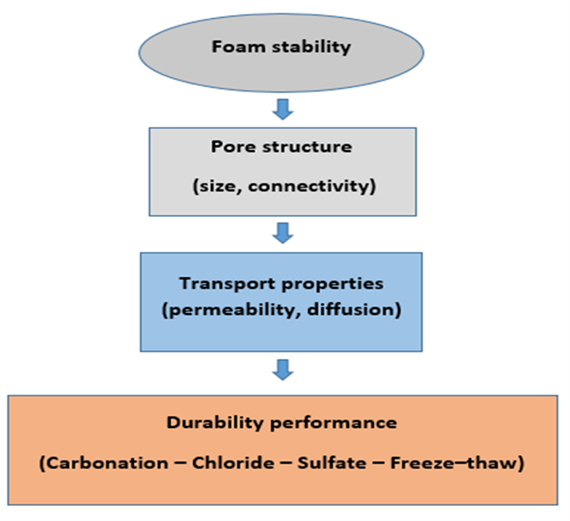
A multitude of preceding reviews have thoroughly examined the overarching characteristics and practical applications of foamed concrete, with a particular emphasis on the contributions of Amran et al. (2015). Despite extensive research on foamed concrete, a clear understanding of the combined influence of pore structure characteristics on durability performance remains insufficient. However, many studies address durability mechanisms in isolation, and a comprehensive, integrated analysis linking pore structure characteristics---such as connectivity, tortuosity, and open/closed porosity---with durability performance under different environmental conditions remains limited. Therefore, this review synthesizes experimental findings from the literature to identify the key factors governing the durability of foamed concrete and to propose strategies for improving its long-term performance in construction applications. Figure 1 presents a conceptual framework that illustrates the relationship between foam stability, pore structure characteristics, transport properties, and durability mechanisms in foamed concrete.
Methods
The present study employs a narrative literature review approach, supported by a structured search strategy, to examine the factors affecting the durability of foamed concrete (FC). A comprehensive search of major scientific databases, including Scopus, Web of Science, ScienceDirect, and Google Scholar, was conducted to identify relevant studies. The search strategy targeted peer-reviewed articles published between 2000 and 2025 using keywords such as foamed concrete durability, freeze--thaw resistance, carbonation, chloride penetration, sulfate attack, and pore structure.
The selection of studies was based on their relevance to durability performance in foamed concrete. The review included articles that provided experimental data or analytical discussion on durability mechanisms. Such mechanisms include, but are not limited to, freeze--thaw cycles, drying shrinkage, carbonation, chloride ingress, sulfate attack, and alkali--silica reaction. Studies that did not address durability aspects were excluded from the analysis.
The selected studies were then subjected to analysis and categorized according to major durability factors, including environmental exposure conditions and material-related parameters such as binder composition, fiber reinforcement, pore structure, water--cement ratio, foam stability, and curing methods.
The Principal Elements Influencing Durability
Freeze-Thaw Cycle
Freeze--thaw deterioration, a process defined by the expansion and subsequent contraction of water within the pore system that results in the generation of internal hydraulic pressure, has been observed to potentially exceed the tensile capacity of the cement matrix. In foamed concrete, the presence of distributed air voids can partially accommodate this expansion, which may improve freeze--thaw resistance compared with conventional concrete under certain conditions (Luo et al., 2018; G. Zhou & Su, 2023). Pore structure and density have been identified as the predominant factors influencing freeze--thaw durability in FC, as evidenced by experimental findings. Mixtures with a more uniform pore distribution and stable foam structure generally exhibit improved resistance because closed air voids can act as pressure relief chambers during freezing. For instance, Tikalsky et al. (2004) demonstrated that compressive strength, absorption capacity, and penetration depth are critical indicators of freeze--thaw durability in cellular concrete. The incorporation of supplementary cementitious materials has been demonstrated to influence freeze--thaw performance by modifying pore structure. For instance, Bayraktar et al. (2021) reported that mixtures containing ground granulated blast furnace slag (GGBFS) and waste marble powder exhibited enhanced freeze--thaw resistance, with compressive strength increases of 56.6%, 49.4%, and 12.8% after 50, 100, and 150 cycles, respectively. The observed enhancements were ascribed to matrix densification and diminished permeability. Conversely, the incorporation of fibers has been demonstrated to augment freeze--thaw durability by regulating crack propagation and enhancing structural integrity. Gencel et al. (2021) reported that hemp fiber-reinforced foamed concrete incorporating 10% fly ash exhibited the highest improvement in strength after freeze--thaw exposure. However, further increases in fly ash content led to a gradual reduction in strength due to its slow early-age pozzolanic reactivity. It is noteworthy that the reference mixture (R100), which was devoid of fly ash and fibers, exhibited an extraordinary increase of approximately 309% in compressive strength. This substantial enhancement is chiefly ascribed to the sustained curing effect that ensues from extended freeze--thaw exposure, wherein specimens are subjected to recurrent moisture conditions over a duration that exceeds the conventional 28-day curing protocol. Furthermore, the R100 mixture's initial strength, which is notably low, results in a substantial amplification of the calculated percentage increase. From a microstructural perspective, the low density of this mixture results in a highly porous matrix, which facilitates increased water absorption and internal saturation during freeze--thaw cycles. The sustained moisture availability promotes further hydration of previously unreacted cement particles, contributing to additional formation of hydration products and partial densification of the cementitious matrix. However, it is imperative to acknowledge that this apparent enhancement in strength is predominantly attributable to prolonged curing under conducive moisture conditions, rather than an intrinsic enhancement in the freeze--thaw resistance of the material.
Despite the existence of numerous studies that have documented enhanced freeze--thaw resistance at reduced densities, the correlation between foam content and durability remains a multifaceted and intricate subject. Excessive foam volumes have been demonstrated to increase pore connectivity and permeability, thereby accelerating water ingress and exacerbating freeze--thaw damage. Therefore, achieving an optimal balance between density reduction and pore stability is imperative for ensuring the durability of foamed concrete mixtures.
A comprehensive review of the extant literature indicates that the resistance of foamed concrete to freeze--thaw conditions is predominantly influenced by three primary factors. Firstly, the distribution of pore size is found to be a pivotal element in dictating the material's resilience. Secondly, the stability of the foam and its composition, as influenced by the binder, play a significant role in determining the material's capacity to withstand the pressures resulting from internal freezing. Collectively, these factors contribute to the overall performance of foamed concrete under freeze--thaw conditions.
As illustrated in Table 1, Gencel et al. (2021) examined the mix proportions, foam density, and compressive strength of foamed concrete before and after freeze--thaw cycles (0 and 50 cycles, respectively).
Table 1. Mix Proportions, Foam Density, and Compressive Strength of Foamed Concrete before and after Freeze--Thaw Cycles (0 and 50 cycles) (Gencel et al., 2021).
| Code | FA (%) | Foam content (kg/m³) | Fiber length (cm) | Fiber Ratio (%) | OPC (kg/m³) | FA (kg/m³) | Silica sand (kg/m³) | Water (kg/m³) | Fibers (kg/m³) | w/b | compressive strength (Mpa) | The percentage increase in compressive strength after 50 F-T cycles | |
|---|---|---|---|---|---|---|---|---|---|---|---|---|---|
| 0 F-T cycles | 50 F-T cycles | ||||||||||||
| R50 | 0 | 50 | - | - | 450 | - | 1204 | 225 | - | 0.5 | 19.26 | 20.39 | 5.9 |
| FA0F50 | 0 | 50 | 0.5 | 0.75 | 450 | 0 | 1204 | 225 | 3.375 | 0.5 | 21.03 | 21.25 | 1 |
| FA10F50 | 10 | 50 | 0.5 | 1.5 | 405 | 45 | 1141 | 225 | 6.75 | 0.5 | 19.77 | 24.88 | 25.8 |
| FA20F50 | 20 | 50 | 1 | 0.75 | 360 | 90 | 1178 | 225 | 3.375 | 0.5 | 18.04 | 20.24 | 12.2 |
| FA30F50 | 30 | 50 | 2 | 3 | 315 | 135 | 1165 | 225 | 13.5 | 0.5 | 21.34 | 22.66 | 6.2 |
| FA40F50 | 40 | 50 | 1 | 3 | 270 | 180 | 1152 | 225 | 13.5 | 0.5 | 13.97 | 18.2 | 30.3 |
| FA50F50 | 50 | 50 | 2 | 1.5 | 225 | 225 | 1139 | 225 | 6.75 | 0.5 | 8.67 | 13.22 | 52.56 |
| R75 | 75 | - | - | 450 | - | 988 | 225 | - | 0.5 | 4.71 | 10.32 | 119 | |
| FA0F75 | 0 | 75 | 1 | 1.5 | 450 | 0 | 988 | 225 | 6.75 | 0.5 | 12.81 | 13.24 | 3.47 |
| FA10F75 | 10 | 75 | 1 | 3 | 405 | 45 | 975 | 225 | 13.5 | 0.5 | 7.48 | 9.89 | 32.2 |
| FA20F75 | 20 | 75 | 2 | 1.5 | 360 | 90 | 961 | 225 | 6.75 | 0.5 | 8.00 | 8.57 | 7 |
| FA30F75 | 30 | 75 | 0.5 | 0.75 | 315 | 135 | 948 | 225 | 3.357 | 0.5 | 5.15 | 10.76 | 109.1 |
| FA40F75 | 40 | 75 | 2 | 0.75 | 270 | 180 | 935 | 225 | 3.375 | 0.5 | 2.61 | 4.61 | 76.6 |
| FA50F75 | 50 | 75 | 0.5 | 3 | 225 | 225 | 922 | 225 | 13.5 | 0.5 | 3.60 | 5.11 | 41.9 |
| R100 | 100 | - | - | 450 | - | 717 | 225 | - | 0.5 | 2.01 | 8.22 | 309 | |
| FA0F100 | 0 | 100 | 2 | 3 | 450 | 0 | 771 | 225 | 13.5 | 0.5 | 11.09 | 11.15 | 0.5 |
| FA10F100 | 10 | 100 | 2 | 0.75 | 405 | 45 | 758 | 225 | 3.375 | 0.5 | 2.20 | 4.53 | 106.4 |
| FA20F100 | 20 | 100 | 0.5 | 3 | 360 | 90 | 745 | 225 | 13.5 | 0.5 | 7.18 | 9.46 | 31.8 |
| FA30F100 | 30 | 100 | 1 | 1.5 | 315 | 135 | 732 | 225 | 6.75 | 0.5 | 2.44 | 3.22 | 32 |
| FA40F100 | 40 | 100 | 0.5 | 1.5 | 270 | 180 | 718 | 225 | 6.75 | 0.5 | 1.94 | 2.04 | 5.2 |
| FA50F100 | 50 | 100 | 1 | 0.75 | 225 | 225 | 705 | 225 | 3.375 | 0.5 | 3.46 | 3.67 | 6.1 |
Shrinkage
The phenomenon of drying shrinkage (DS) deformation arising from moisture movement represents a critical durability concern in cementitious materials and may increase the likelihood of cracking. This effect is more pronounced in FC because the lack of coarse particles, which normally restrain shrinkage deformation in conventional concrete and contribute to long-term dimensional stability (Nambiar & Ramamurthy, 2009; Ramamurthy et al., 2009; Tran et al., 2021). Drying shrinkage, defined as the loss of volume in a material due to moisture evaporation, occurs when moisture evaporates from the gel and capillary pores of hardened cement paste under unsaturated conditions. This process leads to a volumetric contraction of the material (Collins & Sanjayan, 2000). Excessive or non-uniform shrinkage has been demonstrated to have a significant impact on the mechanical and durability properties of concrete (Wan et al., 2017). The magnitude of drying shrinkage in FC is closely related to the pore structure of the cement matrix, particularly the distribution of micropores within critical pore size ranges. For example, Georgiades et al. (1991) found that micropores between 20 and 200 Å (angstrom) exhibited significant shrinkage, while Ziembicka (1977) observed that micropores between 75 and 625 Å (angstrom) displayed a similar trend. The phenomenon of higher capillary stresses during moisture evaporation is attributable to smaller capillary pores. This, in turn, increases shrinkage deformation. In contrast, larger air voids exert a limited influence on shrinkage due to their negligible contribution to volumetric change during water loss. Cebeci (1981) also reported that entrapped large air voids have minimal influence on the micro-pore structure responsible for shrinkage. The foam volume (FV) also plays an important role in shrinkage behavior. As the foam volume increases, the paste content in the mixture decreases, resulting in fewer capillary pores responsible for shrinkage and consequently reducing overall shrinkage deformation (Nambiar & Ramamurthy, 2009). The reported drying shrinkage values for FC typically range between 0.1% and 0.35% of the total hardened volume. Nambiar & Ramamurthy (2009) observed that increasing foam volume significantly reduced shrinkage, with reductions of up to 36% at 50% FV, mainly due to reduced paste content and lower pore water. Fiber reinforcement is a common method employed to control shrinkage by bridging microcracks and enhancing tensile resistance. Madhwani et al. (2021) reported that fiber-reinforced FC exhibited reduced drying shrinkage compared with plain mixtures. In a similar vein, Raj et al. (2020) examined the use of hybrid fiber reinforcement, employing both coir (a natural material) and polyvinyl alcohol (PVA) fibers in the form of a filament winding (FC) structure, with a density of 1600 kg/m3. The incorporation of fibers was conducted at specific volume fractions, namely 0.3%, 0.4%, and 0.5%. The findings indicated that coir fibers exhibited a reduction in drying shrinkage and thermal conductivity, attributable to their flexibility and moisture retention capacity. In contrast, PVA fibers demonstrated greater efficacy in diminishing plastic shrinkage. The optimal performance was achieved with a combination of 0.3% PVA and 0.2% coir fibers. The water-cement ratio exerts a substantial influence on the drying shrinkage behavior of concrete. Gong et al. (2021) investigated the effects of varying water-to-cement ratios (W/C) on the drying shrinkage of concrete mixtures. The study found that higher W/C ratios resulted in increased drying shrinkage due to enhanced capillary tension and moisture loss during the drying process. Higher water-cement ratios have also been demonstrated to increase pore connectivity, thereby facilitating moisture transport and accelerating shrinkage. The influence of other additives on shrinkage behavior warrants further investigation. Gong & Li (2020) conducted a study to examine the impact of epoxy resin (EP) on the permeability and drying shrinkage of FC. The incorporation of 4% EP led to a reduction in drying shrinkage of approximately 48%. A microstructural analysis was conducted, revealing that EP formed a micro-mesh structure within the cement matrix. This resulted in improved pore distribution and a reduction in average pore size. This modification reduced water permeability and capillary pressure, thereby mitigating shrinkage. The primary shrinkage outcomes derived from the aforementioned studies are outlined in Table 2.
A comprehensive review of the extant literature reveals that the phenomenon of drying shrinkage in foamed concrete is predominantly influenced by the characteristics of the pore structure, the volume of the foam, the water-cement ratio, and the presence of fiber reinforcement. The optimization of these parameters has been demonstrated to result in a substantial reduction in shrinkage, while preserving the lightweight characteristics of foamed concrete.
Table 2. Reported Drying Shrinkage Values of Foamed Concrete in Selected Studies.
| Shrinkage Reduction | Additive | Study |
|---|---|---|
| up to 36% | Increased FV | Nambiar & Ramamurthy (2009) |
| reduced shrinkage | Fiber reinforcement | Madhwani et al. (2021) |
| ~48% reduction | 4% epoxy resin | Gong & Li (2020) |
Resistance to Carbonation
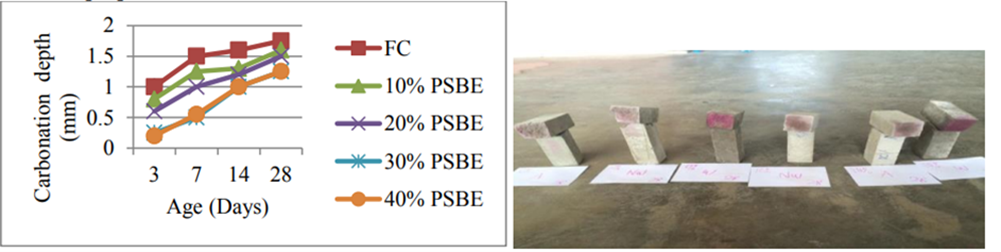
Carbonation, defined as the process by which carbon dioxide (CO₂) permeates concrete and reacts with cement hydration products such as calcium hydroxide (Ca(OH)₂), calcium silicate hydrate (C--S--H), and hydrated calcium aluminate phases (CAH), yielding calcium carbonate (CaCO₃) (G. Zhou & Su, 2023), has been extensively researched. This reaction has been shown to reduce the alkalinity of the cement matrix and lower the pore solution pH. In reinforced concrete, this reduction may cause the passive layer protecting embedded steel reinforcement to become unstable, potentially initiating corrosion processes (M. Zhang et al., 2019). Foam concrete (FC) has been observed to generally carbonate more rapidly in comparison to conventional concrete. This accelerated carbonation process can be attributed to the inherent highly porous cellular structure of FC. The interconnected pore network facilitates the diffusion of carbon dioxide (CO₂) and the transport of moisture, thereby accelerating carbonation reactions. Consequently, the process of carbonation in FC is found to be strongly influenced by the pore structure, density, and environmental conditions, including the CO₂ concentration, temperature, and relative humidity (Costa et al., 2019; Kellouche et al., 2019; Namsone et al., 2017). Lower-density FC typically exhibits elevated carbonation rates due to the presence of larger, interconnected pores, which facilitate the penetration of carbon dioxide. The incorporation of supplementary cementitious materials has been demonstrated to enhance carbonation resistance through the refinement of the pore structure. Rokiah et al. (2019) reported that replacing part of the cement with processed spent bleaching earth (PSBE) reduced carbonation depth in FC. This enhancement was ascribed to the pozzolanic reaction of PSBE, which utilizes Ca(OH)₂ and produces additional C--S--H, thereby leading to a more compact microstructure and reduced permeability. Mixtures containing 30--40% PSBE demonstrated a conspicuously diminished carbonation depth in comparison with the control mixture. As illustrated in Figure 2, an increase in PSBE concentration results in a decrease in carbonation depth.
Furthermore, nanomaterials have been demonstrated to enhance carbonation resistance. As reported by Y. Zhang et al. in 2025, the incorporation of 5% C--S--H/PCE nanocomposites led to a substantial enhancement in the performance of FC. The nano-composite CPNs-A demonstrated an approximate 44% increase in compressive strength and a reduction in carbonation depth to approximately 6 millimeters after a seven-day period. These enhancements have been ascribed to the refinement of pore structure and the enhancement of foam stability that resulted from the reduction in particle size of the nano-composite (Y. Zhang et al., 2025). The effect of carbonation is contingent upon the presence of reinforcement and the specific carbonation process. In reinforced FC, the presence of carbonation is typically deleterious due to its propensity to augment the risk of steel corrosion. However, in non-reinforced FC elements, such as lightweight blocks or wall panels, the process of carbonation may contribute to partial microstructural densification through the formation of CaCO3. Consequently, accelerated carbonation curing has been examined as a technique to enhance mechanical performance while augmenting CO2 sequestration in cement-based materials. Accelerated carbonation has been shown to modify the microstructure by precipitating CaCO3 within the pore system, which may result in a partial reduction of open porosity (Dapkus & Stankevičius, 1985). Gupta et al. (2022) reported that accelerated carbonation of fly ash concrete containing biochar increased CO2 uptake (up to 30% after 28 days) and reduced water-accessible porosity by about 2--3%, leading to compressive strength improvements of up to 23% compared with control mixes. As illustrated in Table 3, a quantitative analysis of carbonation depth is presented, comparing different binder systems.
However, a direct comparison of the carbonation resistance of these materials is complicated by the variety of testing methods, exposure conditions, and curing regimes employed in different studies. Furthermore, the combined effects of pore structure, density, and pozzolanic additives on long-term carbonation resistance in FC are not consistently reported. The carbonation behavior of foam concrete is governed primarily by its pore structure and density, which control CO2 diffusion and reaction kinetics. Therefore, the optimization of pore structure through appropriate mix design, supplementary cementitious materials, and curing strategies is essential to balance carbonation resistance, mechanical performance, and long-term durability.
Table 3. Summary of Carbonation Depth for Various Binder Types and Conditions.
| Observation | Carbonation Depth (mm) | Exposure Days | Density (kg/m³) | Additive (%) | Binder type | References |
|---|---|---|---|---|---|---|
| Improved resistance due to pozzolanic reaction | Less than 4 | 28 | Not specified | 30-40% PSBE | Cement + PSBE | Rokiah et al. (2019) |
| Reduced depth due to denser pore structure | 6 | 7 | Not specified | 5% Nano compound CPNs-A | Cement | Y. Zhang et al. (2025) |
| CO2 uptake and shrinkage behavior | Not numeric | 28 | 1150 | Biochar: 3% (replacement of FA) | Cement + FA + Biochar | Gupta et al. (2022) |
| Enhanced strength and reduced porosity under carbonation | Not numeric | 28 | 1450 | Biochar: 20% (replacement of SF) | Cement + SF + Biochar | Gupta et al. (2022) |
Resistance to Chloride Environments
Chloride ingress represents a significant durability concern for reinforced concrete when exposed to marine environments or deicing salts. The penetration of chloride ions into concrete is primarily facilitated by diffusion, capillary absorption, and permeation until reaching the steel reinforcement. The initiation of corrosion is characterized by the presence of chloride ions in excess of a critical threshold at the steel surface, resulting in the dissolution of the passive protective film (Van Rooyen, 2020). In uncracked concrete, chloride penetration is relatively slow; however, cracks have been shown to significantly accelerate chloride transport. In the context of foam concrete (FC), chloride transport is found to be profoundly influenced by the characteristics of pore structure and density. The cellular microstructure contains numerous air voids that may restrict water transport when isolated; however, interconnected pores can facilitate chloride diffusion. Consequently, chloride resistance in FC is predominantly determined by pore connectivity, rather than solely by total porosity. The design parameters of a mixture, such as the proportion of foam and the water-to-cement ratio (w/c), have been shown to have a substantial impact on chloride penetration. An increase in foam content has been shown to reduce density, potentially facilitating increased chloride penetration when there is an increase in pore connectivity. Conversely, higher w/c ratios have been observed to result in larger capillary pores and accelerated chloride diffusion. As demonstrated in the research conducted by Bagheri & Rastegar (2021) and Rastegar & Bagheri (2022), experimental studies have confirmed that chloride penetration depth increases with both foam content and w/c ratio.
Supplementary cementitious materials (SCMs), such as fly ash (FA) and ground granulated blast furnace slag (GGBFS), have been shown to enhance chloride resistance through the refinement of the pore structure by means of pozzolanic reactions, which result in the production of additional C--S--H gel (Gopalakrishnan et al., 2020; Makul, 2022). However, Van Rooyen (2020) reported that FA incorporation in certain FC mixtures increased chloride penetration due to alterations in pore size distribution and enhanced capillary suction. The results of long-term exposure studies also underscore the role of environmental conditions. Wasim et al. (2022) observed higher corrosion rates of steel reinforcement in FC when specimens were immersed in a 5% chloride solution compared with 3%. Analogous trends were documented for geopolymer foam concrete (GFC), wherein elevated chloride concentrations, along with heightened temperature and humidity levels, led to a marked acceleration in corrosion rates (Wasim et al., 2021). Surface treatments, including hydrophobic agents and pore-blocking materials, have been shown to further reduce water absorption and limit chloride penetration (Shi et al., 2022; Van Rooyen, 2020). The overall resistance of foam concrete to chloride environments is primarily determined by the pore structure, density, and binder composition of the material. It is imperative to optimize the composition of the foam, the proportion of water to cement, and the implementation of SCMs to curtail chloride transport and enhance the long-term durability of FC.
Resistance to Alkali-Silica Reaction
The alkali-silica reaction (ASR) is defined as the interaction between alkali in cement and reactive silica in aggregates in the presence of moisture after the concrete has hardened. A substantial ASR can induce substantial internal expansion of the concrete, which can result in extensive cracking and degradation. In low-density foam concrete, the ASR is negligible; however, in high-density foam concrete, a significant ASR can lead to expansion and cracking (Khan et al., 2019).
In the context of foam concrete (FC), the progression of alkali-silica reaction (ASR) expansion is contingent upon its intricate cellular composition, characterized by substantial porosity. The substantial quantity of air voids present in low-density FC affords additional space for expansion products, which can partially accommodate ASR gel formation and reduce internal stresses. Consequently, the expansion caused by ASR in FC is generally lower than that observed in conventional concrete with similar mix proportions (Krishna Kumar & Chinnaraju, 2022). However, in higher-density FC mixtures where there is a reduction in pore connectivity and an increase in matrix density, ASR-induced expansion and cracking may become more pronounced (Khan et al., 2019). The use of supplementary cementitious materials is a common practice in the field of FC, with the primary objective of mitigating ASR. The incorporation of low-calcium Class F fly ash (FA) has been demonstrated to reduce the availability of alkalis through pozzolanic reactions that consume calcium hydroxide and form additional C--S--H gel. This, in turn, has been shown to lower the alkalinity of the pore solution and limit ASR development (J. Li et al., 2020). Experimental investigations further underscore the impact of reactive materials, such as glass powder. Krishna Kumar and Chinnaraju (2022) evaluated the expansion of FC specimens immersed in a sodium hydroxide solution for 28 and 365 days. Their findings indicated that an increase in glass powder content led to an escalated rate of ASR expansion, attributable to the presence of reactive silica. However, the incorporation of nano bio-carbonate has been documented to retard ASR development and mitigate expansion. In a similar vein, Massekh & Hillal (2022) examined FC mixtures in which sand was partially substituted with waste glass and subjected to a sodium hydroxide solution. The findings indicated that augmenting the waste glass content led to heightened ASR expansion, with greater expansion values being observed in comparison to mixtures devoid of glass waste. The glass expansion process was found to be significantly influenced by the chemical composition and the size of the glass particles. Moreover, the use of fiber reinforcement has been documented to mitigate the adverse effects of ASR. The incorporation of polypropylene fibers has been demonstrated to assist in the control of crack propagation and the enhancement of the matrix's capacity to resist expansion stresses associated with ASR (Krishna Kumar & Chinnaraju, 2022; Massekh & Hillal, 2022). Furthermore, Gencel et al. (2022) reported that partially replacing expanded perlite with fine glass sand reduced ASR expansion in FC. This enhancement was ascribed to enhanced dispersion of alkalis and modification of the pore structure, which curtailed the formation of expansive reaction byproducts. The susceptibility of foam concrete to alkali--silica reaction is influenced by three primary factors: its pore structure, binder composition, and aggregate type. The incorporation of supplementary cementitious materials, the optimization of mix design, and the implementation of fiber reinforcement have been demonstrated to effectively mitigate ASR expansion and enhance the long-term durability of FC. Table 4 provides a synopsis of the impact of diverse materials and mix parameters on ASR expansion behavior in foam concrete, as reported in extant studies.
Table 4. Summary of Reported Alkali--Silica Reaction (ASR) Behavior in Foamed Concrete Mixtures from Previous Studies.
| Reported ASR Behaviour | Exposure Condition | Key Variable | Foam Concrete Type | Study |
|---|---|---|---|---|
| Higher-density FC showed more noticeable ASR expansion compared with low-density FC. | ASR durability test | Density variation | Foam concrete (various densities) | Khan et al. (2019) |
| Higher glass powder content increased ASR expansion; nano bio-carbonate delayed the reaction and reduced expansion. | Immersion in NaOH solution for 28 and 365 days | Glass powder content | FC with glass powder | Krishna Kumar & Chinnaraju (2022) |
| Incorporation of low-lime Class F FA reduced ASR expansion due to alkali consumption through pozzolanic reaction. | ASR mitigation study | low-lime Class F Fly ash replacement | FC with low-lime Class F fly ash | J. Li et al. (2020) |
| Increasing waste glass content increased ASR expansion due to reactive silica. | NaOH exposure test | Sand replacement with waste glass | FC with waste glass | Massekh & Hillal (2022) |
| Fiber reinforcement helped control crack propagation and reduced damage caused by ASR expansion. | ASR expansion test | Polypropylene fibers | Fiber-reinforced FC | Krishna Kumar & Chinnaraju (2022); Massekh & Hillal (2022) |
| Fine glass sand improved alkali dispersion and reduced ASR expansion in FC. | Durability evaluation | Replacement of expanded perlite | FC with fine glass sand | Gencel et al. (2022) |
Resistance to Sulfate Environments
Sulphate attack has been shown to have a significant impact on the durability and lifespan of FC by promoting the formation of expansive products such as ettringite and gypsum. These products generate internal stresses, which can lead to cracking (Neville, 2004; Santhanam et al., 2003; J. Wang et al., 2021; Yildirim & Sümer, 2013; X. Zhao et al., 2021; R. Zhou et al., 2020). Sulfate ions infiltrate the pore system of the cement matrix and react with calcium aluminate phases to form ettringite, while reactions with calcium hydroxide may yield gypsum. The formation of these expansive products increases internal pressure within the pore structure, resulting in microcracking and gradual deterioration of the material. Material density exerts a significant influence on the regulation of sulfate resistance in FC, directly impacting porosity and permeability. In higher-density mixtures, the lower porosity restricts sulfate ingress; however, when density decreases within certain ranges, increased porosity may facilitate sulfate penetration. In low- and medium-density FC, the presence of larger internal pores may partially accommodate sulfate reaction products, thereby reducing expansion (Bayraktar et al., 2023; Gencel et al., 2021; R. Jones et al., 2012). The parameters that influence sulfate resistance in FC include the water-cement ratio, dry density, cement type, sulfate concentration, type of sulfate cation (Na+ or Mg2+), exposure duration, and incorporation of mineral admixtures. The incorporation of supplementary cementitious materials and polymeric additives has been demonstrated to enhance sulfate resistance through the refinement of pore structure and the reduction of permeability (Priyatham et al., 2023). According to S. Zhang et al. (2020), the partial replacement of cement with silica fume and waste marble powder has been shown to enhance sulfate resistance through the densification of the cement matrix and the restriction of expansive product formation, such as ettringite and gypsum. According to Gencel et al. (2021), hemp fibers in mixtures containing 50% fly ash and a foam content of 50 kg/m³ exhibited the lowest compressive strength loss (4.7%) under sulfate exposure, as illustrated in Table 5.
Bayraktar et al. (2021) also observed that mixtures containing silica fume and optimized cement content exhibited improved resistance to sulfuric acid, freeze--thaw cycles, and abrasion due to the formation of denser C--S--H gels, which reduce permeability and create a more protective microstructure. In contrast, J. Liu et al. (2014) reported that the addition of rubber powder beyond 0.11% of cement weight led to a substantial reduction in sulfate resistance, attributable to the increased porosity of the matrix. In a similar vein, the incorporation of polypropylene fibers into the composite may augment its overall porosity, thereby diminishing its sulfate resistance and augmenting its capacity for expansion (Gencel et al., 2021). The type of sulfate salt also plays a decisive role. Sodium sulfate has been shown to typically cause greater expansion due to its propensity to promote extensive ettringite formation. Conversely, magnesium sulfate has been observed to potentially result in softening and degradation of the cement matrix through the formation of M--S--H phases and gypsum precipitation (Indu Siva Ranjani & Ramamurthy, 2012). In geopolymer foamed concrete (GFC), the reduced calcium hydroxide content, attributable to the use of low-calcium precursors, has been shown to enhance sulfate resistance in comparison with conventional Portland cement (OPC) foamed concrete (Top et al., 2022). However, recent studies suggest that the reduction in compressive strength of GFC may be more significant under magnesium sulfate exposure than under sodium sulfate exposure.
The sulfate resistance of foamed concrete is principally determined by the structure of its pores, its density, and the composition of its binder. Mixtures with refined pore structures and lower permeability have been shown to exhibit enhanced resistance to sulfate attack. This is due to the ability of these mixtures to limit the ingress of aggressive ions and to reduce the formation of expansive reaction products.
Table 5. Mix Proportions, Foam Density, and Compressive Strengths of FC at 91 days & after 5% MgSO4 Exposure (Gencel et al., 2021).
| Code | FA (%) | Foam content (kg/m³) | Fiber length (cm) | Fiber Ratio (%) | OPC (kg/m³) | FA (kg/m³) | Silica sand (kg/m³) | Water (kg/m³) | Fibers (kg/m³) | w/b | compressive strength (Mpa) | Compressive strength reduction (%) | |
|---|---|---|---|---|---|---|---|---|---|---|---|---|---|
| 91 days | 5% MgSO4 | ||||||||||||
| R50 | 0 | 50 | - | - | 450 | - | 1204 | 225 | - | 0.5 | 20.14 | 16.15 | 19.8 |
| FA0F50 | 0 | 50 | 0.5 | 0.75 | 450 | 0 | 1204 | 225 | 3.375 | 0.5 | 21.99 | 18.66 | 15.1 |
| FA10F50 | 10 | 50 | 0.5 | 1.5 | 405 | 45 | 1141 | 225 | 6.75 | 0.5 | 25.39 | 19.93 | 21.5 |
| FA20F50 | 20 | 50 | 1 | 0.75 | 360 | 90 | 1178 | 225 | 3.375 | 0.5 | 22.08 | 18.66 | 15.5 |
| FA30F50 | 30 | 50 | 2 | 3 | 315 | 135 | 1165 | 225 | 13.5 | 0.5 | 27.01 | 20.78 | 23.1 |
| FA40F50 | 40 | 50 | 1 | 3 | 270 | 180 | 1152 | 225 | 13.5 | 0.5 | 20.76 | 17.6 | 15.2 |
| FA50F50 | 50 | 50 | 2 | 1.5 | 225 | 225 | 1139 | 225 | 6.75 | 0.5 | 14.98 | 14.27 | 4.7 |
| R75 | 75 | - | - | 450 | - | 988 | 225 | - | 0.5 | 6.77 | 4.83 | 28.7 | |
| FA0F75 | 0 | 75 | 1 | 1.5 | 450 | 0 | 988 | 225 | 6.75 | 0.5 | 13.7 | 11.06 | 19.3 |
| FA10F75 | 10 | 75 | 1 | 3 | 405 | 45 | 975 | 225 | 13.5 | 0.5 | 10.32 | 1.83 | 82.3 |
| FA20F75 | 20 | 75 | 2 | 1.5 | 360 | 90 | 961 | 225 | 6.75 | 0.5 | 9.95 | 7.34 | 26.2 |
| FA30F75 | 30 | 75 | 0.5 | 0.75 | 315 | 135 | 948 | 225 | 3.357 | 0.5 | 7.39 | 2.62 | 64.55 |
| FA40F75 | 40 | 75 | 2 | 0.75 | 270 | 180 | 935 | 225 | 3.375 | 0.5 | 5.39 | 4.53 | 16 |
| FA50F75 | 50 | 75 | 0.5 | 3 | 225 | 225 | 922 | 225 | 13.5 | 0.5 | 6.11 | 5.4 | 11.6 |
| R100 | 100 | - | - | 450 | - | 717 | 225 | - | 0.5 | 2.06 | 0.74 | 64.1 | |
| FA0F100 | 0 | 100 | 2 | 3 | 450 | 0 | 771 | 225 | 13.5 | 0.5 | 12.67 | 8.6 | 32.1 |
| FA10F100 | 10 | 100 | 2 | 0.75 | 405 | 45 | 758 | 225 | 3.375 | 0.5 | 2.25 | 2 | 11.1 |
| FA20F100 | 20 | 100 | 0.5 | 3 | 360 | 90 | 745 | 225 | 13.5 | 0.5 | 7.84 | 4.38 | 44.1 |
| FA30F100 | 30 | 100 | 1 | 1.5 | 315 | 135 | 732 | 225 | 6.75 | 0.5 | 4.29 | 2.89 | 32.6 |
| FA40F100 | 40 | 100 | 0.5 | 1.5 | 270 | 180 | 718 | 225 | 6.75 | 0.5 | 2.5 | 1.28 | 48.8 |
| FA50F100 | 50 | 100 | 1 | 0.75 | 225 | 225 | 705 | 225 | 3.375 | 0.5 | 5.12 | 4.46 | 12.9 |
Material Composition
Type of Binder and Mineral Additives
The durability-related properties of foamed concrete (FC) are significantly influenced by the type of binder utilized. Lermen et al. (2019) conducted a study on the production of FA foam concrete using various cement types. A comparative analysis was conducted on CP II-F, CP II-Z, and CP V-ARI, with the objective of ascertaining the most optimal performance. It was found that CP II-Z, incorporating pozzolanic elements, exhibited the most optimal performance. The findings demonstrated a decrease in air void content, reduced water absorption, and enhanced compressive strength and density. These outcomes are presumably attributable to the pozzolanic reaction, which generates a more compact matrix and decreases permeability. Conversely, the incorporation of limestone filler, designated as CP II-F, led to an augmentation in porosity, accompanied by a reduction in strength and thermal conductivity (Lermen et al., 2019). In addition to the investigation of cement types, the use of composite binders and mineral additives has been explored as a means to enhance the performance of foamed concrete. Lesovik et al. (2020) conducted a study of composite binders consisting of Portland cement (PC), opoka marl (OM), and fly ash (FA) produced through mechanochemical activation. The presence of OM, which contains reactive minerals such as calcite, clay, zeolite, and opal, has been shown to promote hydration reactions and enhance the formation of secondary calcium silicate hydrates (C--S--H), resulting in a denser microstructure. The results, as outlined in Table 6, demonstrate the impact of varying binder compositions on foam stability. The foam-cement mixture, composed exclusively of pure cement, initially reached a volume of 800 cm³ upon mixing. This volume subsequently diminished to 700 cm³ after a duration of one hour and maintained stability at this level after 12 hours. In contrast, the cement-fly ash mixture demonstrated significantly diminished foam stability, exhibiting a foaming volume of 400 cm³ after mixing. This volume decreased to 300 cm³ after one hour and further diminished to 280 cm³ after 12 hours. The cement-marl system exhibited optimal performance, attaining a foaming volume of 820 cm³ after mixing. This volume experienced a slight decrease to 810 cm³ after one hour and subsequently stabilized at approximately 800 cm³ after 12 hours. This behavior corresponds to the highest system multiplicity coefficient (Ks = 4). The findings suggest that the incorporation of OM enhances the stability of foam and facilitates the development of pore structure in foamed concrete mixtures.
The microstructure of FC can be further modified by mineral additives such as silica fume (SF). According to Li & Cui (2012), the incorporation of SF resulted in the refinement of the pore structure and the densification of the cement matrix. This, in turn, led to an enhancement in resistance to freeze--thaw cycles. However, the reduced internal moisture movement caused by the densified structure may increase shrinkage stresses. This indicates the need to optimize SF dosage to balance durability improvement and dimensional stability (F. LI & CUI, 2012). A comprehensive review of the extant literature indicates that the composition of binders and the incorporation of mineral additives are pivotal in regulating the pore structure and durability performance of foamed concrete. Pozzolanic binders, including FA, SF, and GGBFS, have been shown to enhance durability by refining pore structure and reducing permeability. However, systematic comparative studies under identical experimental conditions remain limited, and further research is required to establish clear guidelines for optimizing binder systems in foamed concrete. The primary outcomes of diverse binder systems and mineral additives, as outlined in extant studies, are enumerated in Table 7.
Table 6. Composition and Properties of Composite Binders for FC Production (Lesovik et al., 2020).
| Content | W/C | Foam agent, %wt. | Foam volume, cm³ after storage | System multiplicity, Ks | ||
|---|---|---|---|---|---|---|
| after mixing | 1 h | 12 h | ||||
| CEM I+SP CEM I+FA+SP CEM I+OM+SP |
0.45 | 0.2 | 800 | 700 | 700 | 3.5 |
| 400 | 300 | 280 | 1.4 | |||
| 820 | 810 | 800 | 4 | |||
Table 7. Comparative Effects of Binder Types and Mineral Additives on Foamed Concrete Performance.
| Main Effect on FC | Additive | Binder Type | Study |
|---|---|---|---|
| Reduced porosity and improved strength | Pozzolanic cement | CP II-Z | Lermen et al. (2019) |
| Improved foam stability and pore refinement | Composite binder | PC + OM + FA | Lesovik et al. (2020) |
| Denser microstructure and improved freeze--thaw resistance | Silica fume | OPC + SF | F. Li & Cui (2012) |
| Improved sulfate resistance | Mineral additives | OPC + WMP + SF | S. Zhang et al. (2020) |
Fibres
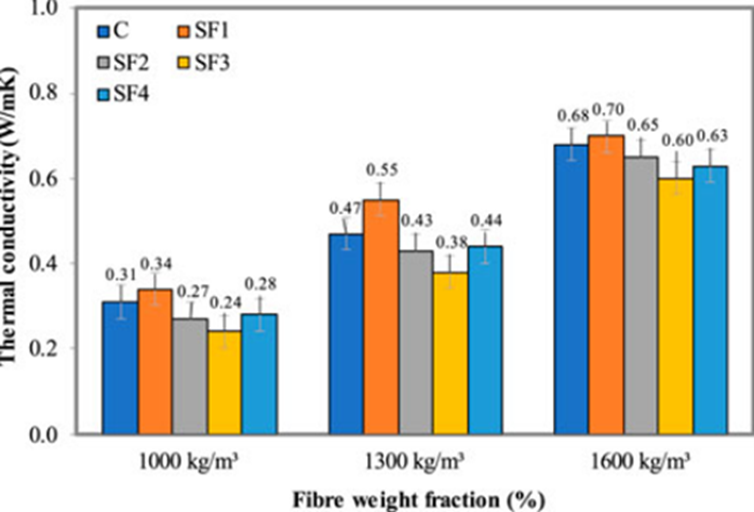
The utilization of both synthetic and natural fibers in cement composite demonstrates the substantial benefits of incorporation. Since 1965, the utilization of synthetic fibers, including acrylic, aramid, carbon, nylon, polyester, polymer, and polyphenylene, has been incorporated into PC concrete. The incorporation of these synthetic fibers has been instrumental in enhancing the mechanical properties of concrete, particularly its durability. These elements have been shown to enhance post-motherpeak ductility, tensile strength, impact resistance, and to prevent temperature- and shrinking-induced cracks (Brown et al., 2002). However, these materials have been observed to impede workability and engender further issues related to compaction (Mastali et al., 2018). Conventional FC is known to be brittle in the absence of reinforcement, but the incorporation of fibers, typically glass or polymer microfibers, has been shown to enhance post-cracking strength and toughness in composites (M. Jones & McCarthy, 2005; M. R. Jones & McCarthy, 2005a, 2005b; Papayianni & Milud, 2005; Zollo & Hays, 1998). The behavior of fiber-reinforced cementitious foams is significantly influenced by the presence of fibers and the low-density void architecture of the cellular structure of concrete matrix. A higher number of pores results in a more complex air-void network at reduced densities (Zollo & Hays, 1998). Awang et al. (2015) examined the impact of integrating polypropylene fibers on the durability and mechanical characteristics of LFC. Polypropylene fibers were utilized at volume fractions of 0.25% and 0.4%. The incorporation of polypropylene fibers had a detrimental effect on compressive strength; nevertheless, the addition of a substantial percentage of polypropylene fibers in LFC enhanced flexural strength, tensile strength, and reduced shrinkage. Fiber-reinforced FC has been shown to possess substantial heat resistance, fire resistance, and thermal insulation properties (Ardhira et al., 2023). A thorough investigation by Othuman Mydin et al. (2023) revealed that the incorporation of synthetic twisted bundle macro-fibers (STBMF) into FC led to a substantial decrease in porosity and water absorption, irrespective of the mixture's density. The optimal fiber content enhanced matrix compaction and reduced thermal conductivity, thereby improving insulation properties. As illustrated in Figure 3, the incorporation of STBMF enhanced the thermal efficiency of FC (Othuman Mydin et al., 2023).
Raj et al. (2020) investigated the impact of a hybrid fiber reinforcement integrating natural (coir) and synthetic (PVA) fibers on the shrinkage characteristics of FC. The research emphasized that fiber type and dosage substantially affect shrinkage management and thermal conductivity. The hybrid mixture of 0.3% PVA and 0.2% coir exhibited an optimal performance in reducing shrinkage while improving mechanical characteristics (Raj et al., 2020).
Water-Cement Ratio
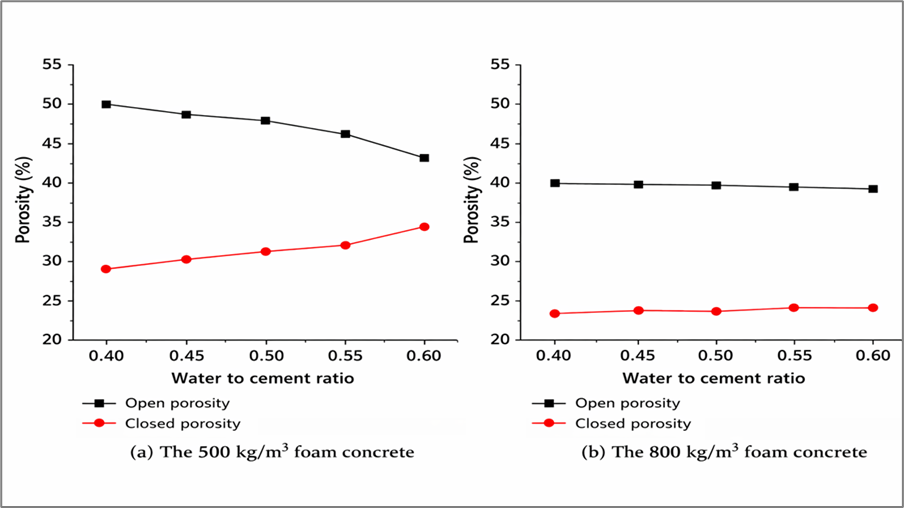
The predominance of hardened concrete properties, particularly durability and strength, is significantly influenced by the (w/c) ratio (Ayanlere et al., 2023). In their seminal study, Jiang et al. (2016) investigated the impact of the w/c ratio on the pore structure of high-porosity FC. The researchers discovered that when the w/c ratio is less than 0.8, the pores are compact, irregularly structured, and extensively interconnected. When the water-to-cement ratio exceeds 0.8, the pores are circular and extensive, accompanied by a broader distribution of pore diameters (Jiang et al., 2016). In their 2016 study, Z. Liu et al. investigated the effect of the (w/c) ratio on the porosity of FC at varying target densities, as illustrated in Figure 4. The figure presents the target density of 500 kg/m³ for mixtures with (w/c) ratios ranging from 0.40 to 0.60 over time. The figure reveals a gradual reduction in open porosity from 49.35% to 43.70%, accompanied by an increase in closed porosity from 28.90% to 34.36%. This phenomenon was attributed to the reduced relative viscosity of the cement paste at high w/c ratios, which promoted coalescence of the bubbles, and to the thicker pore wall. Furthermore, the migration of ions driven by hydration played a pivotal role in the deposition of calcium hydroxide and ettringite surrounding the bubbles. This process led to the formation of pore shells, thereby enhancing closed porosity (Z. Liu et al., 2016). In contrast, (b) demonstrates that the impact of the w/c ratio on porosity was less substantial in mixes with a target density of 800 kg/m³. The open porosity exhibited a negligible decrease, from 40.15% to 39.70%. Conversely, the closed porosity demonstrated a modest increase, from 22.92% to 24.08%, accompanied by an elevated water-to-cement ratio (w/c ratio). The restricted variation was attributed to the intrinsically thicker pore walls and reduced percentage of open pores in high-density FC, which mitigated the effect of the w/c ratio on the evolution of pore structure.
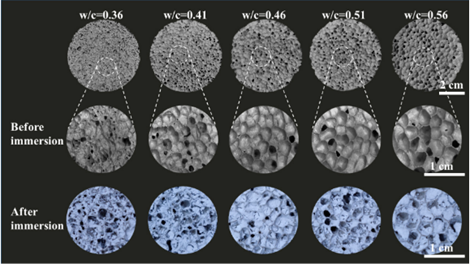
Z. Li et al. (2024) recently investigated the effectiveness of aerogel-enhanced foamed concrete (AEFC). In the present study, MTES-based aerogels were utilized via an impregnation technique. Furthermore, the (w/c) ratio was subjected to rigorous testing. The research examined the primary factor of water absorption in FC, which exerts a considerable influence on its durability. The findings indicated that the w/c ratio has a substantial impact on the microstructure of FC, particularly with regard to porosity and pore distribution. The foam stabilizer was found to be effective in maintaining the bubble structure, resulting in a more uniform and consistent pore network. This observation is particularly significant given that the slurry exhibited an appropriate viscosity at a moderate w/c ratio of 0.41. The w/c ratio exhibited a correlation with lower density and higher porosity, with a minimal value of 0.2 g/cm³. Despite the observed decrease in density, a positive correlation was identified between compressive strength and the w/c ratio. The incorporation of aerogels led to a substantial enhancement in the material's hydrophobicity, culminating in a reduction of water absorption by up to 86% when compared to conventional FC. This constituted the most substantial enhancement. The deformation coefficient demonstrated a substantial increase, rising from 0.62 to 0.78 at a w/c ratio of 0.56. Consequently, it surpassed the minimum durability threshold for a range of construction applications. These findings suggest that optimizing the w/c ratio is imperative not only to enhance the mechanical performance of FC but also to ensure the long-term serviceability and water resistance of the material, particularly when functional additives such as aerogels are incorporated (Z. Li et al., 2024). As demonstrated in Figure 5, the pore size of the FC increases in proportion to the rise in the water-cement (w/c) ratio from 0.36 to 0.56. It is noteworthy that when the water-to-cement ratio is less than 0.41, the FC exhibits a non-uniform pore structure. When the water-to-cement ratio exceeds 0.41, the pores gradually adopt a more circular shape, accompanied by a slight increase in size. This phenomenon can be attributed to the surplus free water generated by the 3% hydrogen peroxide solution employed in the synthesis of the FC.
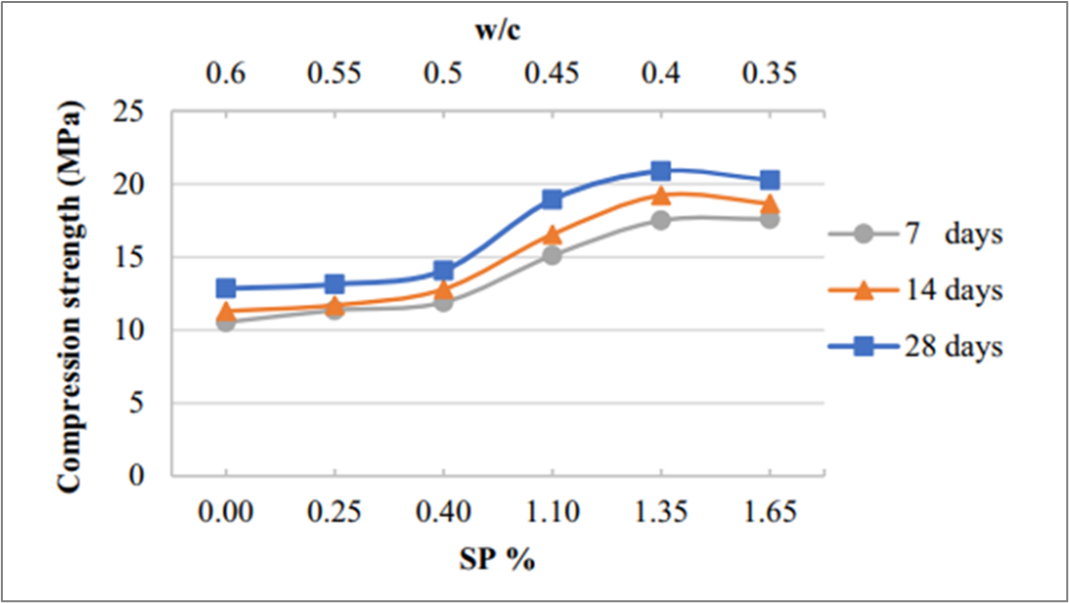
Superplasticizers, particularly polycarboxylate ether (PCE)-based types, disperse cement particles and reduce interparticle attraction, thereby improving mixture flowability and allowing a lower water-cement ratio (w/c) without compromising workability. This function is of particular importance in the context of foam concrete, where its implementation prevents the undesirable effects of compaction and vibration, thereby ensuring the stability of the foam. Research has demonstrated that the incorporation of polycarboxylate superplasticizers leads to substantial enhancements in the fresh and hardened characteristics of foam concrete (Al-Shwaiter et al., 2023), as illustrated in Figure 6. Foam concrete with a target density of approximately 1500 kg/m³ and varying SP contents exhibited enhanced mechanical and transport properties, as well as improved pore distribution and reduced pore sizes. The compressive strength exhibited an upward trend with the incorporation of SP, attaining its maximum value at 1.35% SP. In this concentration, the 28-day strength demonstrated a 63% increase compared to the control mixture. However, increasing the dosage to 1.65% SP led to a slight reduction in strength due to inadequate water for adequate cement hydration. These findings suggest that optimizing the balance between the w/c ratio and SP dosage is imperative for enhancing the performance of foam concrete.
Foam Stability
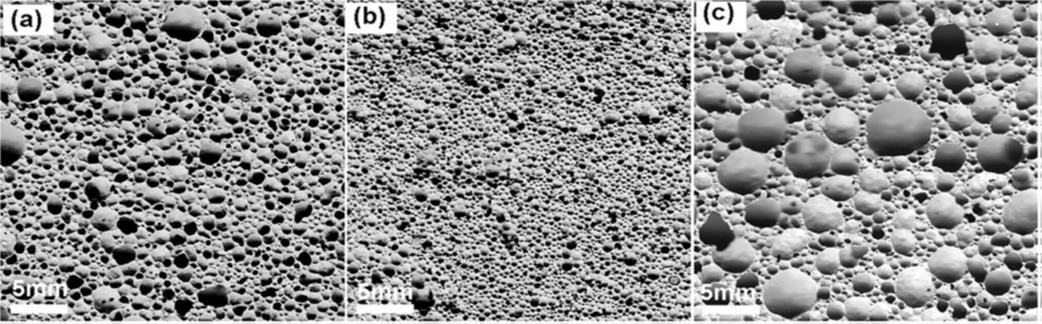
The proportion of air cavities in cellular concrete is constrained to a range of 10% to 70%. The generation of these air cavities, which are produced by the entrapment of air, can be facilitated by the utilization of foaming agents, which can be categorized into two distinct groups: protein-based and synthetic-based agents (Panesar, 2013). The primary constraint on foam stability is foam drainage, which is influenced by gravity. As Hutzler et al. (2005) have demonstrated, liquid descends from the upper to the lower regions of the foam. The employment of a foaming agent has been demonstrated to have a substantial impact on the fluidity of fresh FC, as well as its compressive strength, water absorption, DS, and frost resistance (Sun et al., 2018). Ensuring the durability of the material under unfavorable conditions necessitates the judicious selection of a suitable foaming agent. The optimal foaming agent should promote uniform pore distribution, minimize early segregation, resist chloride and sulfate penetration, and enhance fire resistance (Amran et al., 2015). The distribution, morphology, composition, and architecture of air pores are contingent upon the characteristics of the foaming agent, cement or mortar paste, and the interaction between the paste and foaming agent. This interaction directly influences the mechanical and durability performance of FC (She et al., 2018). In their study, X. Wang et al. (2020) investigated the effect of SF on the stability of foam. The efficacy and cellular composition of foam can be enhanced through the utilization of particle-stabilized foam. The SF was introduced in several stages, and its effect on FC was measured. The incorporation of SF particles into hardened foam results in enhanced strength and density, thereby optimizing the strength-to-density ratio. This enhancement can be attributed to the pozzolanic action exhibited by SF. The rapid hydration of the matrix results in the formation of hydrated calcium silicate (X. Wang et al., 2020). In their experimental study, Z. Li et al. (2024) investigated the impact of incorporating nanoparticles, graphene (G), and specifically nano-silica (NS) into foaming agents on the stability of the resulting foam and the durability of the final foam-cement (FC) composite. The findings of the study demonstrated that the incorporation of NS into premade foam resulted in a significant enhancement of its stability. This enhancement was attributable to an increase in the viscosity of the foaming ingredient, accompanied by a negligible change in surface tension. The addition of G resulted in a significant decline in foam stability, attributable to its substantial effect on surface tension without a concomitant change in viscosity. Furthermore, FC made with NS or a minimal amount of G exhibited smaller and more uniformly spaced air holes, thereby enhancing the compressive strength. However, the application of nanoparticles has been observed to exert restricted or even detrimental effects on numerous performance metrics, including thermal insulation, water absorption, and shrinkage. As demonstrated in Figure 7, cross-sectional views distinctly illustrate variations in the pore structure of FC formulated with foaming agents, including diverse types of nanoparticles. The term "FC" is used to denote the reference FC devoid of nanoparticle additives. The term "FCNS5" is used to denote FC formulated with a foaming agent enhanced by 5% nano-silica. The term "FCG5" is used to denote FC produced with a foaming agent augmented by 5% graphene (Hou et al., 2019).
Falliano et al. (2021) developed a simple and cost-effective foam generator to investigate the effect of foam properties on the characteristics of lightweight and ultra-LFC. The research indicated that air pressure, in conjunction with the type and concentration of the foaming agent, exerts a substantial influence on the density and drainage of the foam. Protein-based foams (Foamin C) demonstrated superior stability and longevity in comparison to synthetic-based foams (SLS), which exhibited rapid drainage following their formation. The incorporation of protein-based foams into cementitious mixtures, with target dry densities of 400, 600, and 800 kg/m³, resulted in a substantial enhancement of compressive strengths, exceeding 1000%, attributable to the improved interactions with cement particles. Furthermore, an increase in the level of the protein-based foaming agent from 3% to 5% led to a 60% rise in compressive strength for ultra-lightweight FA (400 kg/m³), resulting from a more uniform distribution of air bubble sizes. Therefore, it is imperative to employ reliable materials and select an appropriate foaming agent to ensure that FC performs effectively under various environmental conditions while maintaining foam stability, retaining its mechanical strength, and ensuring long-term performance (Falliano et al., 2021).
Curing Methods
Curing is a technique that maintains the moisture level of concrete close to its ideal level to ensure that the cement is fully hydrated. The curing process is contingent upon the appropriate temperature, time, and conditions. The hydration rate is typically governed by the amount and quality of cementitious materials in the mixture, as well as the temperature and moisture content in the air (Richard & Ramli, 2015). The efficacy of the curing process is directly proportional to its ability to augment the strength and durability of the material, while concomitantly ensuring volume stability, resistance to wear, impermeability, and freeze--thaw resistance (Nahata et al., 2014). Kado et al. (2018) conducted a study to examine the impact of air and water curing on LFC with densities ranging from 1500 to 1800 kg/m3. While samples that underwent water-curing exhibited augmented compressive strength, those subjected to air-curing demonstrated superior dimensional stability and a diminished rate of water absorption. It is noteworthy that the maximal splitting tensile strength was recorded at 3.92 MPa at 1800 kg/m³ following 28 days of air curing (Kado et al., 2018). Falliano et al. (2019) examined the effects of fiber-reinforced LFC reinforced by viscosity-modifying agent curing regimes. The variation in flexural strength attributable to curing methodologies was minimal, with an approximate range of 18%. Water curing demonstrated optimal efficacy at higher densities (600--800 kg/m³). Cellophane wrapping exhibited marginal benefits in tensile strength at relatively low densities (400 kg/m³). However, the precision of the measurements was likely compromised by the constraints imposed by the available instrumentation. The impact of curing was found to be diminished under low-density conditions, a phenomenon that may be attributed to the reduced cement content in the unit volume (Falliano et al., 2019). Harith (2018) observed the water curing, moisture curing, curing compounds, and air curing in polyurethane-based FC. The drying shrinkage, as measured on water and moisture curing in days 1 to 56, was recorded at a lower rate than in chemical and air curing. The implementation of FA has been shown to diminish the extent of shrinkage, a phenomenon that has been ascribed to its pozzolanic properties. The pozzolanic action of FA involves the consumption of free water, thereby mitigating evaporation loss during the drying process of the mixture (Harith, 2018). T. Wang et al. (2024) examined the development of early-age strength using steam curing. The mixture under consideration contained 20% free acid (FA) and 1.5% sodium sulfate (Na2SO4). Increasing the curing temperature to 55°C led to a 15% rise in porosity, as evidenced by mercury intrusion porosimetry (MIP). This resulted in a more coarse pore structure, which may potentially compromise long-term durability. The research underscores the imperative to enhance steam curing or modify mix composition to mitigate these impacts (T. Wang et al., 2024).
Conclusion
Foamed concrete (FC) exhibits considerable promise for sustainable construction, primarily due to its low density and thermal insulation properties. Nevertheless, its long-term performance is predominantly influenced by durability-related parameters. The extant research suggests that pore structure and foam stability are the most critical factors controlling permeability, moisture transport, carbonation, chloride ingress, and freeze--thaw resistance.
The predominant deterioration mechanisms in FC, encompassing drying shrinkage, carbonation, chloride penetration, sulfate attack, and freeze--thaw exposure, exhibit a pronounced sensitivity to pore connectivity, density, and binder composition. According to the extant literature, the durability of a material can be enhanced through the optimization of its mix design. For instance, incorporating 4% epoxy resin reduced drying shrinkage by approximately 48%, while 5% C--S--H/PCE nano-composites increased compressive strength by about 44% and reduced carbonation depth to approximately 6 mm after seven days. In a similar vein, fiber-reinforced mixtures with partial fly ash replacement exhibited enhanced performance under freeze--thaw exposure, while mixtures containing 50% fly ash demonstrated the least compressive strength loss (approximately 4.7%) under sulfate attack.
Furthermore, the incorporation of superplasticizers (PCE-based) facilitates a reduction in the water-cement ratio while preserving workability, thereby resulting in a denser matrix and enhanced durability. Research has demonstrated that an optimal dosage (approximately 1.35%) can enhance compressive strength by up to 63%. However, it has also been observed that excessive dosage can diminish performance due to inadequate hydration.
From a pragmatic standpoint, enhancing the durability of fiber-cement composites can be accomplished through the implementation of stable foam systems, refined pore structures, suitable binder combinations, regulated water-cement ratios, optimized superplasticizer dosages, and effective curing methodologies. Water curing has been shown to enhance durability. Conversely, poorly controlled steam curing has been demonstrated to increase porosity, which can negatively affect long-term performance, leading to reduced structural integrity and lifespan of the concrete.
Recommendations
It is imperative that future research concentrate on the following areas:
- The objective is to develop standardized durability testing procedures for FC.
- The objective of this study is to conduct direct comparative analyses on binder systems under conditions of identical exposure.
- The present study aims to elucidate the combined effects of pore connectivity, density, and foam stability on transport properties.
- The present study investigates the potential of nano-modified and surface-treated FC mixtures to enhance durability in aggressive environments.
Declarations
Author Contribution
Z.K.I: Conceptualization, Formal analysis, Resources, Data curation, Writing of the original draft, Writing -- review & editing.
A.K.B: Conceptualization, Formal analysis, Resources, Data curation, Writing of the original draft, Writing -- review & editing.
A.AS: Writing -- review & editing, Supervision.
Conflict of Interest
The authors declare that they have no known competing financial interests or personal relationships that could have appeared to influence the work reported in this paper.
Funding
This research did not receive any specific grant from funding agencies in the public, commercial, or not-for-profit sectors.
Declaration on the Use of Generative AI and AI-Assisted Technologies
No generative AI or AI-assisted technologies were used in the preparation of this manuscript.
Data Availability
No new data was generated or analyzed in this study.
Acknowledgement
The authors declare that there is no acknowledgement to be made.
Ethics
This study did not involve human participants or animals; hence, no ethical approval was required.
References
- Al-Shwaiter, A., Awang, H., & Khalaf, M. A. (2023). The influence of superplasticiser on mechanical, transport and microstructure properties of foam concrete. Journal of King Saud University - Engineering Sciences, 35(2), 101--109. https://doi.org/10.1016/j.jksues.2021.02.010
- Amran, Y. H. M., Farzadnia, N., & Abang Ali, A. A. (2015). Properties and applications of foamed concrete; a review. Construction and Building Materials, 101, 990--1005. https://doi.org/10.1016/j.conbuildmat.2015.10.112
- Ardhira, P. J., Ardra, R., Harika, M., & Sathyan, D. (2023). Study on fibre reinforced foam concrete-a review. Materials Today: Proceedings. https://doi.org/10.1016/j.matpr.2023.03.551
- Awang, H., Azree, M., Mydin, O., & Roslan, A. F. (2012). MICROSTRUCTURAL INVESTIGATION OF LIGHTWEIGHT FOAMED CONCRETE INCORPORATING VARIOUS ADDITIVES. International Journal of Academic Research, 4, 196--200.
- Awang, H., Hafiz Ahmad, M., & Al-Mulali, M. (2015). Influence of kenaf and polypropylene fibres on mechanical and durability properties of fibre reinforced lightweight foamed concrete. Journal of Engineering Science and Technology, 10, 496--508.
- Ayanlere, S. A., Ajamu, S. O., Odeyemi, S. O., Ajayi, O. E., & Kareem, M. A. (2023). Effects of water-cement ratio on bond strength of concrete. Materials Today: Proceedings, 86, 134--139. https://doi.org/10.1016/j.matpr.2023.04.686
- Bagheri, A., & Rastegar, M. M. (2021). Effects of foam content on chloride ingress and steel corrosion in foamed concrete. Magazine of Concrete Research, 73(7), 356--365. https://doi.org/10.1680/jmacr.20.00223
- Bayraktar, O. Y., Soylemez, H., Kaplan, G., Benli, A., Gencel, O., & Turkoglu, M. (2021). Effect of cement dosage and waste tire rubber on the mechanical, transport and abrasion characteristics of foam concretes subjected to H2SO4 and freeze--thaw. Construction and Building Materials, 302, 124229. https://doi.org/10.1016/j.conbuildmat.2021.124229
- Bayraktar, O. Y., Yarar, G., Benli, A., Kaplan, G., Gencel, O., Sutcu, M., Kozłowski, M., & Kadela, M. (2023). Basalt fiber reinforced foam concrete with marble waste and calcium aluminate cement. Structural Concrete, 24(1), 1152--1178. https://doi.org/10.1002/suco.202200142
- Bing, C., Zhen, W., & Ning, L. (2012). Experimental Research on Properties of High-Strength Foamed Concrete. Journal of Materials in Civil Engineering, 24(1), 113--118. https://doi.org/10.1061/(ASCE)MT.1943-5533.0000353
- Brown, R., Shukla, A., & Natarajan, K. R. (2002). Fiber Reinforcement of Concrete Structures. https://doi.org/10.21949/1503647
- Cebeci, Ö. Z. (1981). Pore structure of air-entrained hardened cement paste. Cement and Concrete Research, 11(2), 257--265. https://doi.org/10.1016/0008-8846(81)90067-3
- Collins, F., & Sanjayan, J. G. (2000). Effect of pore size distribution on drying shrinking of alkali-activated slag concrete. Cement and Concrete Research, 30(9), 1401--1406. https://doi.org/10.1016/S0008-8846(00)00327-6
- Cong, M., & Bing, C. (2015). Properties of a foamed concrete with soil as filler. Construction and Building Materials, 76, 61--69. https://doi.org/10.1016/j.conbuildmat.2014.11.066
- Costa, B. L. de S., Freitas, J. C. de O., Melo, D. M. de A., Araujo, R. G. da S., Oliveira, Y. H. de, & Simão, C. A. (2019). Evaluation of density influence on resistance to carbonation process in oil well cement slurries. Construction and Building Materials, 197, 331--338. https://doi.org/10.1016/j.conbuildmat.2018.11.232
- Dapkus, G., & Stankevičius, V. (1985). Cellular Concrete Carbonation. Batiment International, Building Research and Practice, 13(3), 184--187. https://doi.org/10.1080/09613218508551194
- Falliano, D., De Domenico, D., Ricciardi, G., & Gugliandolo, E. (2019). Compressive and flexural strength of fiber-reinforced foamed concrete: Effect of fiber content, curing conditions and dry density. Construction and Building Materials, 198, 479--493. https://doi.org/10.1016/j.conbuildmat.2018.11.197
- Falliano, D., Restuccia, L., & Gugliandolo, E. (2021). A simple optimized foam generator and a study on peculiar aspects concerning foams and foamed concrete. Construction and Building Materials, 268, 121101. https://doi.org/10.1016/j.conbuildmat.2020.121101
- Gencel, O., Yavuz Bayraktar, O., Kaplan, G., Arslan, O., Nodehi, M., Benli, A., Gholampour, A., & Ozbakkaloglu, T. (2022). Lightweight foam concrete containing expanded perlite and glass sand: Physico-mechanical, durability, and insulation properties. Construction and Building Materials, 320, 126187. https://doi.org/10.1016/j.conbuildmat.2021.126187
- Gencel, O., Yavuz Bayraktar, O., Kaplan, G., Benli, A., Martínez-Barrera, G., Brostow, W., Tek, M., & Bodur, B. (2021). Characteristics of hemp fibre reinforced foam concretes with fly ash and Taguchi optimization. Construction and Building Materials, 294, 123607. https://doi.org/10.1016/j.conbuildmat.2021.123607
- Georgiades, A., Ftikos, Ch., & Marinos, J. (1991). Effect of micropore structure on autoclaved aerated concrete shrinkage. Cement and Concrete Research, 21(4), 655--662. https://doi.org/10.1016/0008-8846(91)90116-Y
- Gong, J., & Li, K. (2020). Minimizing Drying Shrinkage and Enhancing Impermeability of Foam Concrete Modified with Epoxy Resin. Advances in Civil Engineering, 2020(1). https://doi.org/10.1155/2020/8897687
- Gong, J., Zhang, W., & Zhou, Z. (2021). Foam Concrete Pore Structure Effect on Drying Shrinkage and Frost Resistance. Journal of Testing and Evaluation, 49(5), 3431--3443. https://doi.org/10.1520/JTE20190550
- Gopalakrishnan, R., Sounthararajan, V., Mohan, A., & Tholkapiyan, M. (2020). The strength and durability of fly ash and quarry dust light weight foam concrete. Materials Today: Proceedings, 22, 1117--1124. https://doi.org/10.1016/j.matpr.2019.11.317
- Gupta, S., Kashani, A., & Mahmood, A. H. (2022). Carbon sequestration in engineered lightweight foamed mortar -- Effect on rheology, mechanical and durability properties. Construction and Building Materials, 322, 126383. https://doi.org/10.1016/j.conbuildmat.2022.126383
- Harith, I. K. (2018). Study on polyurethane foamed concrete for use in structural applications. Case Studies in Construction Materials, 8, 79--86. https://doi.org/10.1016/j.cscm.2017.11.005
- Hashim, M., & Tantray, M. (2021). Comparative study on the performance of protein and synthetic-based foaming agents used in foamed concrete. Case Studies in Construction Materials, 14, e00524. https://doi.org/10.1016/j.cscm.2021.e00524
- Hou, L., Li, J., Lu, Z., Niu, Y., Jiang, J., & Li, T. (2019). Effect of nanoparticles on foaming agent and the foamed concrete. Construction and Building Materials, 227, 116698. https://doi.org/10.1016/j.conbuildmat.2019.116698
- Hutzler, S., Weaire, D., Saugey, A., Cox, S., & Peron, N. (2005). The physics of foam drainage. 52. SEPAWA KONGRESS MIT EUROPEAN DETERGENTS CONFERENCE, 191--206.
- Indu Siva Ranjani, G., & Ramamurthy, K. (2012). Behaviour of foam concrete under sulphate environments. Cement and Concrete Composites, 34(7), 825--834. https://doi.org/10.1016/j.cemconcomp.2012.03.007
- Jiang, J., Lu, Z., Niu, Y., Li, J., & Zhang, Y. (2016). Study on the preparation and properties of high-porosity foamed concretes based on ordinary Portland cement. Materials & Design, 92, 949--959. https://doi.org/10.1016/j.matdes.2015.12.068
- Jones, M., & Mccarthy, A. (2005). Utilising unprocessed low-lime coal fly ash in foamed concrete. Fuel, 84(11), 1398--1409. https://doi.org/10.1016/j.fuel.2004.09.030
- Jones, M. R., & McCarthy, A. (2005a). BEHAVIOUR AND ASSESSMENT OF FOAMED CONCRETE FOR CONSTRUCTION APPLICATIONS. In Use of Foamed Concrete in Construction (pp. 61--88). Emerald Publishing Limited. https://doi.org/10.1680/uofcic.34068.0008
- Jones, M. R., & McCarthy, A. (2005b). Preliminary views on the potential of foamed concrete as a structural material. Magazine of Concrete Research, 57(1), 21--31. https://doi.org/10.1680/macr.2005.57.1.21
- Jones, R., Zheng, L., Yerramala, A., & Rao, K. S. (2012). Use of recycled and secondary aggregates in foamed concretes. Magazine of Concrete Research, 64(6), 513--525. https://doi.org/10.1680/macr.11.00026
- Kado, B., Mohammad, S., Huei Lee, Y., Ngian Shek, P., & Aida Ab Kadir, M. (2018). Effect of Curing Method on Properties of Lightweight Foamed Concrete. International Journal of Engineering & Technology, 7(2.29), 927. https://doi.org/10.14419/ijet.v7i2.29.14285
- Kearsley, E. P., & Wainwright, P. J. (2001). The effect of high fly ash content on the compressive strength of foamed concrete. Cement and Concrete Research, 31(1), 105--112. https://doi.org/10.1016/S0008-8846(00)00430-0
- Kellouche, Y., Boukhatem, B., Ghrici, M., & Tagnit-Hamou, A. (2019). Exploring the major factors affecting fly-ash concrete carbonation using artificial neural network. Neural Computing and Applications, 31(S2), 969--988. https://doi.org/10.1007/s00521-017-3052-2
- Khan, Q. S., Sheikh, M. N., McCarthy, T. J., Robati, M., & Allen, M. (2019). Experimental investigation on foam concrete without and with recycled glass powder: A sustainable solution for future construction. Construction and Building Materials, 201, 369--379. https://doi.org/10.1016/j.conbuildmat.2018.12.178
- Krishna Kumar, P., & Chinnaraju, K. (2022). Utilization potentials of a nano bio-carbonate filler to mitigate alkali-aggregate reactivity of glass powder--foamed concrete. Canadian Journal of Civil Engineering, 49(10), 1569--1581. https://doi.org/10.1139/cjce-2022-0122
- Lermen, R. T., Favaretto, P., Silva, R. de A., Hidalgo, G. E. N., Tubino, R. M. C., & Tiecher, F. (2019). Effect of Additives, Cement Type, and Foam Amount on the Properties of Foamed Concrete Developed with Civil Construction Waste. Applied Sciences, 9(15), 2998. https://doi.org/10.3390/app9152998
- Lesovik, V., Voronov, V., Glagolev, E., Fediuk, R., Alaskhanov, A., Amran, Y. H. M., Murali, G., & Baranov, A. (2020). Improving the behaviors of foam concrete through the use of composite binder. Journal of Building Engineering, 31, 101414. https://doi.org/10.1016/j.jobe.2020.101414
- Li, F., & Cui, Z. P. (2012). Effect of Silica Fume on Dry Shrinkage and Freezing-Thawing Durability of Concrete. Applied Mechanics and Materials, 238, 165--168. https://doi.org/10.4028/www.scientific.net/AMM.238.165
- Li, J., Sun, Z., Pang, M., Tian, J., Ling, Y., Luo, S., & Li, F. (2020). Study on Preparation and Durability of Phosphogypsum Composite Cementitious Foam Concrete. Journal of Physics: Conference Series, 1646(1), 012102. https://doi.org/10.1088/1742-6596/1646/1/012102
- Li, Z., Yao, S., Wang, G., Deng, X., Zhou, F., Wu, X., & Liu, Q. (2024). Enhancing Water Resistance in Foam Cement through MTES-Based Aerogel Impregnation. Gels, 10(2), 118. https://doi.org/10.3390/gels10020118
- Liu, J., Huang, Z. Y., Liu, R. Q., & Hou, T. B. (2014). Research on preparation of sulfate resistance foam concrete. In Green Building, Materials and Civil Engineering (1st ed.). CRC Press.
- Liu, Z., Zhao, K., Hu, C., & Tang, Y. (2016). Effect of Water-Cement Ratio on Pore Structure and Strength of Foam Concrete. Advances in Materials Science and Engineering, 2016, 1--9. https://doi.org/10.1155/2016/9520294
- Luo, Q., Liu, D., Qiao, P., Feng, Q., & Sun, L. (2018). Microstructural damage characterization of concrete under freeze-thaw action. International Journal of Damage Mechanics, 27(10), 1551--1568. https://doi.org/10.1177/1056789517736573
- Madhwani, H., Sathyan, D., & Mini, K. M. (2021). Study on durability and hardened state properties of sugarcane bagasse fiber reinforced foam concrete. Materials Today: Proceedings, 46, 4782--4787. https://doi.org/10.1016/j.matpr.2020.10.313
- Makul, N. (2022). Foamed concrete containing industrial wastes. In Handbook of Sustainable Concrete and Industrial Waste Management (pp. 3--21). Elsevier. https://doi.org/10.1016/B978-0-12-821730-6.00008-5
- Massekh, N. B., & Hillal, A. A. (2022). Alkali-Silica. Reaction Of Foamed. Concrete Containing. Waste Glass as Aggregate. IOP Conference Series: Earth and Environmental Science, 961(1), 012009. https://doi.org/10.1088/1755-1315/961/1/012009
- Mastali, M., Kinnunen, P., Isomoisio, H., Karhu, M., & Illikainen, M. (2018). Mechanical and acoustic properties of fiber-reinforced alkali-activated slag foam concretes containing lightweight structural aggregates. Construction and Building Materials, 187, 371--381. https://doi.org/10.1016/j.conbuildmat.2018.07.228
- Nahata, Y., Kholia, N., & Tank, T. G. (2014). Effect of Curing Methods on Efficiency of Curing of Cement Mortar. APCBEE Procedia, 9, 222--229. https://doi.org/10.1016/j.apcbee.2014.01.040
- Nambiar, E. K. K., & Ramamurthy, K. (2009). Shrinkage Behavior of Foam Concrete. Journal of Materials in Civil Engineering, 21(11), 631--636. https://doi.org/10.1061/(ASCE)0899-1561(2009)21:11(631)
- Namsone, E., Šahmenko, G., & Korjakins, A. (2017). Durability Properties of High Performance Foamed Concrete. Procedia Engineering, 172, 760--767. https://doi.org/10.1016/j.proeng.2017.02.120
- Neville, A. (2004). The confused world of sulfate attack on concrete. Cement and Concrete Research, 34(8), 1275--1296. https://doi.org/10.1016/j.cemconres.2004.04.004
- Othuman Mydin, M. A., Mohd Nawi, M. N., Omar, R., Dulaimi, A., Najm, H. M., Mahmood, S., & Sabri Sabri, M. M. (2023). Mechanical, durability and thermal properties of foamed concrete reinforced with synthetic twisted bundle macro-fibers. Frontiers in Materials, 10. https://doi.org/10.3389/fmats.2023.1158675
- Panesar, D. K. (2013). Cellular concrete properties and the effect of synthetic and protein foaming agents. Construction and Building Materials, 44, 575--584. https://doi.org/10.1016/j.conbuildmat.2013.03.024
- Papayianni, I., & Milud, I. A. (2005). PRODUCTION OF FOAMED CONCRETE WITH HIGH CALCIUM FLY ASH. In Use of Foamed Concrete in Construction (pp. 23--27). Emerald Publishing Limited. https://doi.org/10.1680/uofcic.34068.0003
- Priyatham, B. P. R. V. S., Lakshmayya, M. T. S., & Chaitanya, D. V. S. R. K. (2023). Review on performance and sustainability of foam concrete. Materials Today: Proceedings. https://doi.org/10.1016/j.matpr.2023.04.080
- Raj, B., Sathyan, D., Madhavan, M. K., & Raj, A. (2020). Mechanical and durability properties of hybrid fiber reinforced foam concrete. Construction and Building Materials, 245, 118373. https://doi.org/10.1016/j.conbuildmat.2020.118373
- Ramamurthy, K., Kunhanandan Nambiar, E. K., & Indu Siva Ranjani, G. (2009). A classification of studies on properties of foam concrete. Cement and Concrete Composites, 31(6), 388--396. https://doi.org/10.1016/j.cemconcomp.2009.04.006
- Rastegar, M. M., & Bagheri, A. (2022). Effect of foam volume on penetration parameters of foamed concrete. Magazine of Concrete Research, 74(19), 989--998. https://doi.org/10.1680/jmacr.21.00247
- Richard, A., & Ramli, M. (2015). The Effects of Curing Methods on Early-age Strength of Sustainable Foamed Concrete. Advances in Research, 3(6), 548--557. https://doi.org/10.9734/AIR/2015/13373
- Rokiah, O., Khairunisa, M., Youventharan, D., & Arif, S. M. (2019). Effect of processed spent bleaching earth content on the compressive strength of foamed concrete. IOP Conference Series: Earth and Environmental Science, 244, 012013. https://doi.org/10.1088/1755-1315/244/1/012013
- Santhanam, M., Cohen, M. D., & Olek, J. (2003). Mechanism of sulfate attack: a fresh look. Cement and Concrete Research, 33(3), 341--346. https://doi.org/10.1016/S0008-8846(02)00958-4
- She, W., Zhao, G., Cai, D., Jiang, J., & Cao, X. (2018). Numerical study on the effect of pore shapes on the thermal behaviors of cellular concrete. Construction and Building Materials, 163, 113--121. https://doi.org/10.1016/j.conbuildmat.2017.12.108
- Shi, D., Geng, Y., Li, S., Gao, J., Hou, D., Jin, Z., & Liu, A. (2022). Efficacy and mechanism of graphene oxide modified silane emulsions on waterproof performance of foamed concrete. Case Studies in Construction Materials, 16, e00908. https://doi.org/10.1016/j.cscm.2022.e00908
- Sun, C., Zhu, Y., Guo, J., Zhang, Y., & Sun, G. (2018). Effects of foaming agent type on the workability, drying shrinkage, frost resistance and pore distribution of foamed concrete. Construction and Building Materials, 186, 833--839. https://doi.org/10.1016/j.conbuildmat.2018.08.019
- Tang, S. W., Yao, Y., Andrade, C., & Li, Z. J. (2015). Recent durability studies on concrete structure. Cement and Concrete Research, 78, 143--154. https://doi.org/10.1016/j.cemconres.2015.05.021
- Tikalsky, P. J., Pospisil, J., & MacDonald, W. (2004). A method for assessment of the freeze--thaw resistance of preformed foam cellular concrete. Cement and Concrete Research, 34(5), 889--893. https://doi.org/10.1016/j.cemconres.2003.11.005
- Top, S., Altıner, M., & Vapur, H. (2022). Properties of alkali-activated lightweight concrete. In Handbook of Advances in Alkali-Activated Concrete (pp. 345--367). Elsevier. https://doi.org/10.1016/B978-0-323-85469-6.00022-2
- Tran, N. P., Gunasekara, C., Law, D. W., Houshyar, S., Setunge, S., & Cwirzen, A. (2021). A critical review on drying shrinkage mitigation strategies in cement-based materials. Journal of Building Engineering, 38, 102210. https://doi.org/10.1016/j.jobe.2021.102210
- Van Rooyen, A. S. (2020). Mechanics and durability of surface treated structural foamed concrete. http://hdl.handle.net/10019.1/108319
- Wan, K., Li, G., Wang, S., & Pang, C. (2017). 3D full field study of drying shrinkage of foam concrete. Cement and Concrete Composites, 82, 217--226. https://doi.org/10.1016/j.cemconcomp.2017.06.001
- Wang, J., Huang, B., Mao, Z., & Wang, Y. (2021). Study on Adsorption Properties of Calcined Mg--Al Hydrotalcite for Sulfate Ion and Chloride Ion in Cement Paste. Materials, 14(4), 994. https://doi.org/10.3390/ma14040994
- Wang, K.-S., Chiou, I.-J., Chen, C.-H., & Wang, D. (2005). Lightweight properties and pore structure of foamed material made from sewage sludge ash. Construction and Building Materials, 19(8), 627--633. https://doi.org/10.1016/j.conbuildmat.2005.01.002
- Wang, S. H. (2011). Preparation of Foam Concrete from Graphite Tailing. Advanced Materials Research, 356--360, 1994--1997. https://doi.org/10.4028/www.scientific.net/AMR.356-360.1994
- Wang, T., Gao, X., Li, Y., & Liu, Y. (2024). An orthogonal experimental study on the influence of steam-curing on mechanical properties of foam concrete with fly ash. Case Studies in Construction Materials, 20, e02665. https://doi.org/10.1016/j.cscm.2023.e02665
- Wang, X., Huang, J., Dai, S., Ma, B., & Jiang, Q. (2020). Investigation of silica fume as foam cell stabilizer for foamed concrete. Construction and Building Materials, 237, 117514. https://doi.org/10.1016/j.conbuildmat.2019.117514
- Wasim, M., Duc Ngo, T., & Law, D. (2021). Durability performance of reinforced waste-based geopolymer foam concrete under exposure to various corrosive environments. Case Studies in Construction Materials, 15, e00703. https://doi.org/10.1016/j.cscm.2021.e00703
- Wasim, M., Roychand, R., Barnes, R., Talevski, J., Law, D., Li, J., & Saberian, M. (2022). Performance of Reinforced Foam and Geopolymer Concretes against Prolonged Exposures to Chloride in a Normal Environment. Materials, 16(1), 149. https://doi.org/10.3390/ma16010149
- Yildirim, K., & Sümer, M. (2013). Effects of sodium chloride and magnesium sulfate concentration on the durability of cement mortar with and without fly ash. Composites Part B: Engineering, 52, 56--61. https://doi.org/10.1016/j.compositesb.2013.03.040
- Zhang, M., Zhang, W., & Sun, Y. (2019). Durability of concrete with nano-particles under combined action of carbonation and alkali silica reaction. Journal of Asian Architecture and Building Engineering, 18(5), 421--429. https://doi.org/10.1080/13467581.2019.1677470
- Zhang, S., Cao, K., Wang, C., Wang, X., Wang, J., & Sun, B. (2020). Effect of silica fume and waste marble powder on the mechanical and durability properties of cellular concrete. Construction and Building Materials, 241, 117980. https://doi.org/10.1016/j.conbuildmat.2019.117980
- Zhang, Y., Gu, K., Liu, J., Zheng, X., Qiu, W., Wang, Y., & Tan, H. (2025). Effect of C-S-H/PCE on compressive strength and carbonation resistance of foamed concrete. Construction and Building Materials, 495, 143548. https://doi.org/10.1016/j.conbuildmat.2025.143548
- Zhao, F. Q., Liu, J. Q., Li, Q., & Li, H. (2010). Study of Foamed Concrete from Activated Ash/Slag Blended Cement. Advanced Materials Research, 160--162, 821--826. https://doi.org/10.4028/www.scientific.net/AMR.160-162.821
- Zhao, X., Wang, H., Zhou, B., Gao, H., & Lin, Y. (2021). Resistance of Soda Residue--Fly Ash Based Geopolymer Mortar to Acid and Sulfate Environments. Materials, 14(4), 785. https://doi.org/10.3390/ma14040785
- Zhou, G., & Su, R. K. L. (2023). A Review on Durability of Foam Concrete. Buildings, 13(7), 1880. https://doi.org/10.3390/buildings13071880
- Zhou, R., Cheng, H., Li, M., Zhang, L., & Hong, R. (2020). Energy Evolution Analysis and Brittleness Evaluation of High-Strength Concrete Considering the Whole Failure Process. Crystals, 10(12), 1099. https://doi.org/10.3390/cryst10121099
- Ziembicka, H. (1977). Effect of micropore structure on cellular concrete shrinkage. Cement and Concrete Research, 7(3), 323--332. https://doi.org/10.1016/0008-8846(77)90095-3
- Zollo, R. F., & Hays, C. D. (1998). Engineering Material Properties of a Fiber Reinforced Cellular Concrete (FRCC). ACI Materials Journal, 95(5), 631--635. https://doi.org/10.14359/405
Copyright © 2026 by the authors. Licensee Scientific Steps International Publishing Services, Dubai, UAE.
This article is an open access article distributed under the terms and conditions of the
Creative Commons Attribution (CC BY) 4.0 license.