

Steps For Civil, Constructions and Environmental Engineering (SCCEE)
ISSN: 3005-8198(online) | 3005-818X(print)
Volume 4, Issue 1 (January - March 2026)
 Research Article
Influence of Samples Dimensions and Anisotropy on the Properties of Laterite Stone from Burkina Faso
Laboratoire Eco-Matériaux et Habitat Durable (LEMHaD), International Institute for Water and Environmental Engineering, 01 PO 594 Ouagadougou 01, rue de la Science, Burkina Faso.
Abstract
The present paper expounds upon the findings of characterization studies conducted on three laterite quarries in Burkina Faso. These quarries have been deemed suitable for utilization in standardized masonry structures. Despite its abundance, the utilization of Laterite Stone (LS) as a construction material in buildings remains underutilized. Consequently, there is an absence of technical data necessary for the design of safe structures. Samples were obtained from both artisanal and mechanized quarries and subsequently submitted to laboratory analysis. A comprehensive study of the physical and mechanical properties has been conducted to dismantle the influence of the geometry of the blocks on the characteristic values, such as the compressive strength and the elastic moduli, according to different standards observed. The objective of this study is twofold: first, to ascertain the viability of this material for low-rise or mid-rise constructions, and second, to examine the impact of anisotropy on the characteristics under investigation. The dimensions of the blocks utilized in this study range from 70×70 mm² to 140×140 mm² for compression tests and from 50×50×300 mm³ to 30×100×350 mm³ for flexural tensile strength tests. The dimensions are reported with a margin of error of approximately 2 millimeters. The mineralogical composition of the LS use is primarily comprised of kaolinite, quartz, and goethite. On the one hand, the findings indicated a substantial variation in the elastic moduli and the modulus of rupture, contingent on the dimensions of the blocks. Conversely, the compressive strength values exhibited approximately 27% higher values when the load was applied in the plane perpendicular to the schistosity beds of the layers as opposed to the plane parallel to it.
Keywords: Anisotropy; Burkina Faso; Laterite Stone; Masonry; Mechanical Properties.
Introduction
The judicious utilization of construction materials in buildings constitutes a matter of paramount concern for all development actors. It is imperative to assess the load-bearing capacity of structures, particularly in the context of new generation structures that draw upon established building technologies. Laterite stones (LS) are a type of construction material that has been utilized for various building purposes in countries such as Burkina Faso. According to the Indian standard IS:3620-1979, LS with a minimum compressive strength of 3.5 MPa is suitable for use in building constructions as masonry structures. The extant models for calculation of masonry structures prove to be inapposite when it comes to the behaviors of masonry structures based on LS blocks (KABORE et al., 2019). The empirical models for calculating masonry structures, as described in the works of Babu et al. (2007), Hendry & Malek (1986), Kirtschigg (1985), Mann (1982), and Mann & Muller (1982), are inherently tied to the mechanical properties of the masonry blocks. When employed to analyze materials not initially considered in the model’s development, these models should be utilized with caution and care to ensure the accuracy of the results.
A comprehensive review of the extant literature on the physical, mechanical, and thermal properties of laterite stone and associated masonry reveals its potential as a sustainable alternative to conventional materials, particularly in tropical regions. Laterite, a type of rock composed of weathered clay minerals, exhibits variable water absorption rates. On average, laterite absorbs approximately 15% of water, a figure that falls slightly below the standards set by the IS: 3620-1979 standard, which stipulates limits of 12% and 2.5% for water absorption, respectively (Benon et al., 2025). Additionally, laterite typically exhibits a specific gravity of approximately 2.23, which also falls below the specified limits of 2.5. Mechanical assessments indicate compressive strengths ranging from 2.55 megapascals (MPa) in dry conditions to 3.2 MPa when wet for concretionary variants. These strengths are comparable to those of softer, doughy-like laterites, suggesting their suitability for load-bearing applications in diverse environments, including waterlogged areas (Benon et al., 2025; Rodrigues, 2025). Research on cut laterite blocks in masonry, such as stack-bonded prisms with cement mortar, has demonstrated failure modes under compression via splitting and crushing. Tension and shear tests have indicated joint ruptures, with superior performance observed in samples featuring reduced clay content and elevated ferrous minerals, as confirmed by microstructural analysis (Bhat et al., 2024a; Krishna et al., 2024). From a thermal perspective, laterite stone envelopes in traditional constructions demonstrate superior performance in comparison to contemporary RCC-framed clay brick systems. This is due to the enhanced insulation and reduced heat gain characteristics of the former, which contribute to a reduction in energy consumption and an enhancement in efficiency, particularly in eco-sensitive settings (Kapadia, 2025; Lekjep et al., 2024). In general, the aforementioned properties highlight laterite’s capacity for self-hardening and its environmentally friendly characteristics. However, it is crucial to note that the terminology and specifications employed in this field underscore the necessity for precise classification, thereby ensuring engineering reliability (Molla et al., 2024; Netterberg, 2025; Pratheeksha & Umaraniya, 2025; Thamboo et al., 2024; Xie et al., 2024).
The objective of this study is to evaluate the influence of the block size and the existence of anisotropy planes on the mechanical and physical properties of the LS in Burkina Faso. This is necessary because some of the standards extrapolated to LSD do not provide specific information on some aspects. This will serve as a foundational element for empirical or numerical models, which are employed to calculate the safety of masonry structures. For the purpose of common usage, this material must be studied in accordance with established conventions.
A number of studies have been conducted on the mechanical and thermal properties of LS, as evidenced by the work of Lawane et al. (2013). Given the incompatibility of international standards with local materials, which often result in the provision of general guidelines, a direct comparison of outcomes between countries is rendered challenging. A number of studies have been conducted to investigate the mechanical properties of LS and their potential applications in the field of masonry. However, it is important to note certain deficiencies in the study.
In the study by Kasthurba et al. (2007), the history of the formation and hardening of laterite is examined. The research design involved the selection of four quarries for detailed experimentation and measurement. These experiments and measurements included the assessment of hardness using a type P pendulum hammer and a scratch test, as well as the determination of compression strength in accordance with the ASTM C 170-90 method. The specimens were tested in a saturated condition, i.e., after soaking in water for 48 hours. ASTM C 170 fails to provide explicit instructions regarding the precise dimensions of the specimens to be utilized in the testing procedure. According to the prescriptions of (IS.: 1121, 1974), the sample utilized for the Unconfined Compression Strength (UCS) test must be sized in such a manner that the diameter or lateral dimension (distance between opposite vertical faces) of a test piece is not less than 50 mm, and the ratio of height to diameter or lateral dimension is not less than 1:1. In accordance with the aforementioned standard, Dsouza and Dileep Kumar (2017) conducted UCS tests on cubic specimens measuring 150 mm x 150 mm x 150 mm. In Burkina Faso, the standard size of blocks utilized for LS masonry is approximately 300 millimeters by 200 millimeters by 150 millimeters. It has been posited that conducting tests on samples of this dimension would “fit with the reality of the structure.” This phenomenon is exemplified by the following case in point. (Nasheed et al., 2018). Lawane et al. (2011) proposed a study of the UCS on samples of various dimensions. Samples measuring 400 mm x 200 mm x 150 mm, 300 mm x 200 mm x 150 mm, 200 mm x 200 mm x 150 mm, 150 mm x 150 mm x 150 mm, and 100 mm x 100 mm x 100 mm were evaluated. The specimens are loaded into the plane, which is composed of two lower lengths. According to the prescriptions of ASTM-C170/C170M-17 (2017) and ISGS 1121 (1974), the previously cited studies are in accordance with the established standards. Consequently, they should provide values that can be used to calculate masonry structures. A comparative analysis reveals that the French standard (EN 1926, 1999) exhibits a higher degree of specificity compared to the ASTM-C170/C170M-17 (2017) and IS (1121, 1974) standards. The dimensions of the specimens are specified as 70mm x 70mm x 70mm in accordance with EN 1926, 1999, and this measurement is consistent with the two other specimens. In (KABORE et al., 2019), the compressive strength of sampled LS was measured according to the standard (EN 1926, 1999).
Two of the quarries selected for the present study were previously examined in other publications, including Kabore et al. (2019) and Lawane Gana (2014). The mineralogical and chemical composition of the laterite were subsequently delineated. It can be deduced that the most prevalent minerals in these laterite stones are kaolinite (Al2Si2O5(OH)4) and quartz, with mass ratios exceeding 30%. The second set of phases is constituted by goethite (FeO(OH)) at 20% by mass and hematite (Fe2O3) at 6% by mass, along with a trace of ferrite (iron alpha). A preliminary observation of the chemical element reveals the presence of aluminum, silicon, and iron. Their proportions exceed 30%. As indicated in Kasthurba et al. (2007), the primary outcomes demonstrate a range of compressive strengths from 0.66 to 3.19 megapascals (MPa) and a spectrum of water absorption rates from 9.12 to 15.73%. The notion that laterite is a heterogeneous material is accentuated. The properties of laterite are contingent upon factors such as the specific quarry and the depth of excavation. The compressive strength of the LS is directly proportional to its depth from the surface.
Methods
Quarry Identification and Sampling
In accordance with the findings of Lawane (Lawane Gana, 2014), who conducted a series of studies on multiple lateritic stone quarries throughout Burkina Faso, a number of quarries were identified as possessing intriguing physical and mechanical properties, indicating their potential for utilization in construction endeavors. These quarries were subsequently selected for the collection of samples. In instances where feasible, the same quarries as those documented in Lawane Gana’s 2014 study were targeted and exploited. Given that some of these quarries are no longer in operation, nearby quarries that could exhibit similar properties were identified.
In the southwestern region of Burkina Faso, three quarries were identified: Dano 1, Dano 2, and Diebougou. At each of these locations, samples of laterite were collected for subsequent analysis in a laboratory setting. These lateritic stones, distinguished by their reddish hue, are extracted from four distinct quarries in Dano, Diebougou, and surrounding areas.
The regions of Dano and Diébougou are located in the province of Houndié. As demonstrated in Figure 1 from Ladmirant et al. (Ladmirant & Legrand, 1977), the geological map of Houndié exhibits a basement composed of gneiss, granite, and migmatite-type rocks, dating from the Lower and Middle Precambrian. The stratigraphic classification of the basement in question falls under the category of pre-Birimian, a designation that encompasses rocks and minerals that have been shaped by volcanic processes, particularly pyroclastic flows and volcano-sedimentary deposits.
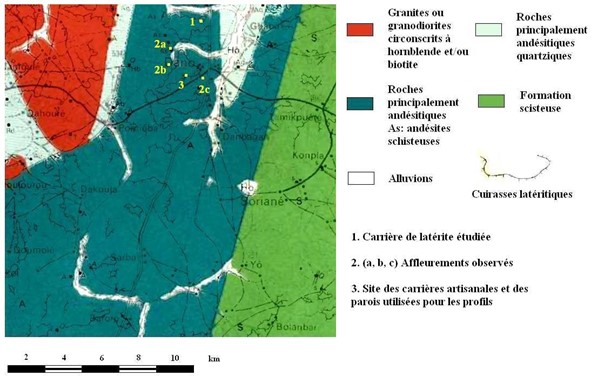
The Birimian system, distinguished by its remarkable biodiversity, spans from Banfora to Batié in the southwestern region, encompassing Diébougou and Boromo, extending into Ghana. Subsequently, more recent Tertiary and Quaternary formations are observed overlying the altered and eroded basement. These include lateritic deposits, alluvium, and fluvio-lacustrine complexes.
In the Dano region, the laterite layer is particularly evident, exhibiting a tabular form that extends slightly eastward. This stratum is overlain by schistose andesites, whose schistosity is oriented in a manner consistent with the Birimian orientations observed in quartz veins.
The topography is distinguished by a succession of depressions and extensive, shallow valleys that traverse the plateaus or buttes (interfluves), which are composed of hardened laterites. In certain instances, these interfluves disclose the existence of a subjacent substrate of profoundly altered white schist. The geological formation known as colluvium, which is aligned with the slope of the terrain, covers the gentle slopes. The phenomenon of regressive erosion has resulted in the dispersal of rock blocks across these slopes, with dimensions ranging from a few meters to a few decimeters. The region is characterized by the presence of quartz stones, suggesting the existence of isolated vein deposits.
Preliminary geological evidence suggests the presence of an alterite that is likely allochthonous and has undergone significant induration into laterite. The erosion of granitic and andesitic reliefs into a peneplain, associated with moderate displacement of materials with slightly laminated facies, has led to the lateralization of residual detrital formations. Consequently, watercourses have the capacity to erode these lateritic plateaus, which exhibit a high degree of resistance to surface erosion, particularly from runoff. In certain instances, this process may reveal the underlying bedrock, which is composed of white schist.
In contrast, the outskirts of Ouagadougou contain elements that are primarily derived from crystalline and crystallophyllian formations of the basement. As Castaing and Chevremont (Castaing et al., 2003) have demonstrated, these geological formations can be classified into three primary categories: The geologic formation consists of Quaternary alluvium, post-Birimian dolerites, and Birimian basement granitoids.
The Birimian basement granitoids are typified by a variety of rock formations, including quartziferous diorites, amphibole- and biotite-bearing granitoids, and amphibole- and biotite-bearing gneissic rocks. Medium-grained biotite- and amphibole-bearing granites have been identified in proximity to porphyroid granitoids containing biotite. Furthermore, a limited number of rare occurrences of amphibolites have been documented in the eastern and northern regions of Ouagadougou.
Post-Birimian dolerites are seldom observed in the study region and manifest as a dike in the southwestern sector on the geological map. Quaternary alluvium, characteristic of low-lying regions within the Ouagadougou basin and specific ephemeral watercourses, comprises sandy, gravelly, and clayey deposits.
In the vicinity of the capital, Ouagadougou, a distinctive aluminum-ferruginous lateritic cuirass is observed, overlying zones of clayey alteration and substantial granitic arenites. Hydric and eolian erosion frequently exposes these extensive cuirasses, thereby revealing the remnants of a very ancient peneplain, characterized by tabular mounds.
As indicated by Castaing and Chevremont (Castaing et al., 2003), the outcrops in this region consist of two primary facies: foliated granodiorite, tonalite, and quartz diorite, as well as porphyritic granodiorite containing amphibole and biotite. Granodiorites typically manifest a mineralogical composition that is predominantly characterized by the presence of quartz, orthoclase, microcline, and plagioclase. Notably, plagioclase constitutes a significant proportion of these rocks, further classifying them as members of the alkali-silicate category.
LS Production Method
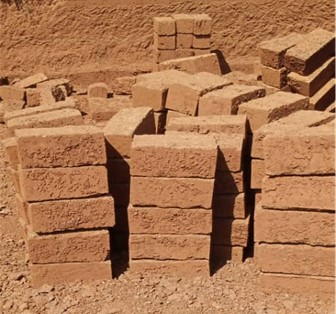
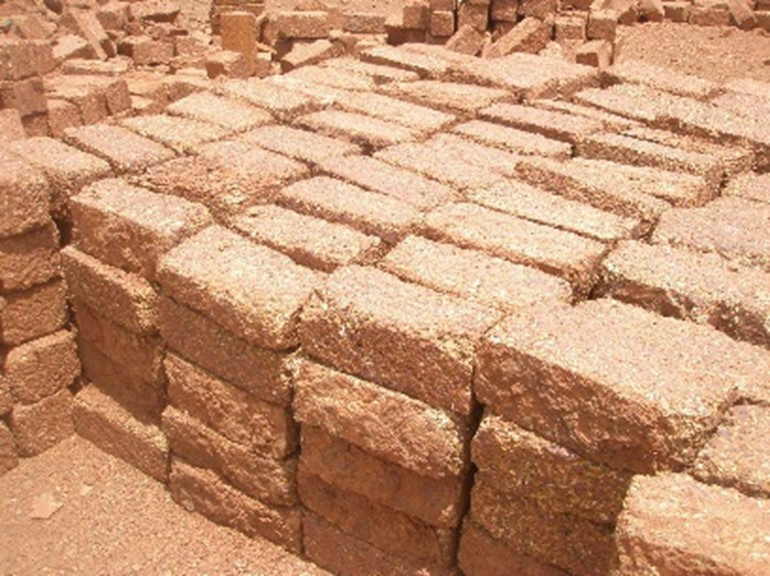
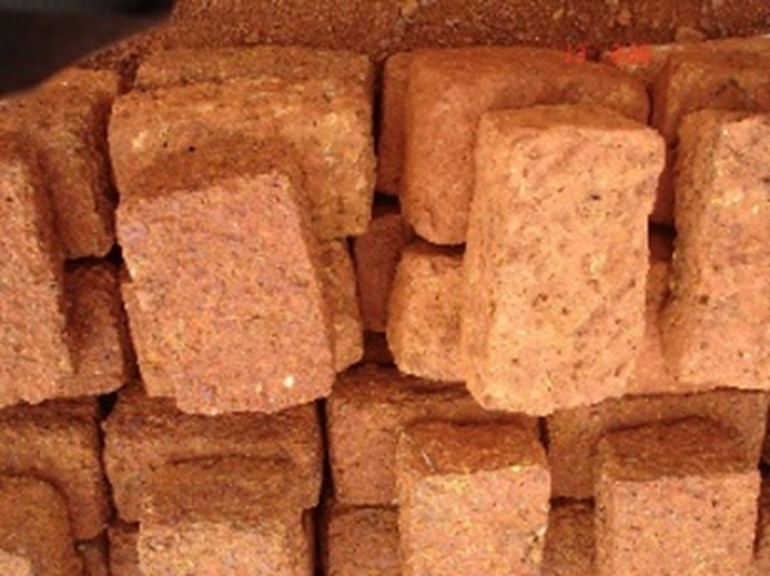
The laterite stones are raw earthen materials that are reddish in color. They are extracted from the localities of Dano and Diebougou from three different quarries. Two of the quarries are located in Dano (11° 10’29.14”N, 3° 2’32.78”W, and an altitude of 278 m) for MENA quarries (Dano 2) and (11° 8’38.20”N, 3° 3’59.50”W, and an altitude of 322 m) for CERMA quarries (Dano 1). The third quarry is situated in Diébougou at 10°58’43.19”N, 3°14’12.38”W, at an altitude of 295 meters. The quarry is referred to as MALO quarry.
Physical and Mechanical Properties of the LS
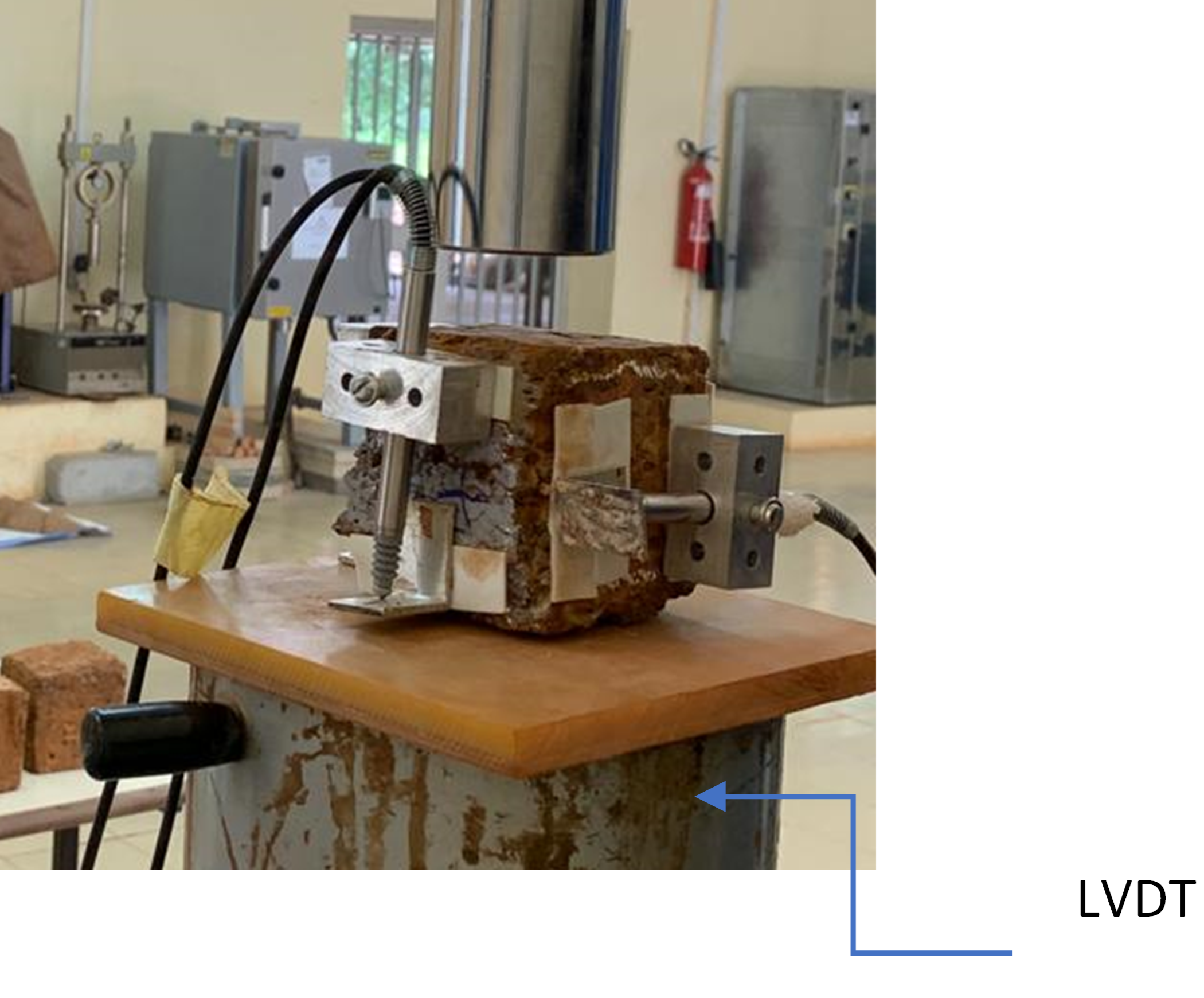
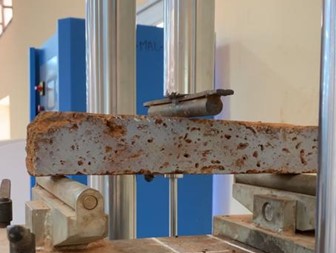
A comprehensive array of mechanical properties was measured, including compressive strength, flexural strength, Young’s modulus, and Poisson’s ratio. These measurements were obtained using a hydraulic press, a method that has been widely accepted in the field. The established standards to which the results were compared include ASTM Standards C170, C1352, C99, C880, and French standards NF EN 1926, NF EN 12372. The dimensions of the samples are specified in the relevant standard of the conducted test. In each instance, a total of eight samples are subjected to rigorous testing. It should be noted that the samples utilized for compression testing have been precisely measured to 70 mm in length, 70 mm in width, and 70 mm in height, as well as 140 mm in length, 140 mm in width, and 140 mm in height, with the objective of facilitating a more meaningful comparison.
The mechanical properties, particularly the uniaxial compression strength, which is both documented in the extant literature and the subject of experimental study in this case, are coded as demonstrated in Table 1.
Table 1. The Codification for the Results Presented.
| Author | Quarry | Loaded Area | Code |
|---|---|---|---|
| Narayanoswamy et al 2016 | 2 – TOUSSIANA – 1 | 60×60 | 2-1-2 |
| Nasheed et al 2018 | 3 – UL – 1 | 200×150 | 3-1-3 |
| 3 – PTA – 2 | 200×150 | 3-2-3 | |
| 3 – MU – 3 | 200×150 | 3-3-3 | |
| 3 – PM – 4 | 200×150 | 3-4-3 | |
| Lawane et al 2011 | 4 – DANO1 – 1 | 200×200 | 4-1-4 |
| Current study | 5 – DANO1 – 1 | 70×70 | 5-1-5 |
| 5 – DANO1 – 1 | 140×140 | 5-1-6 | |
| 5 – DANO2 – 2 | 70×70 | 5-2-5 | |
| 5 – DANO2 – 2 | 140×140 | 5-2-6 |
Results and Discussions
A thorough analysis of the evolution of the global bearing capacity per surface unit reveals a positive correlation between sample size and relative bearing capacity. Figure 8 illustrates the global evolution of compression strength as a function of the size of the loaded area.
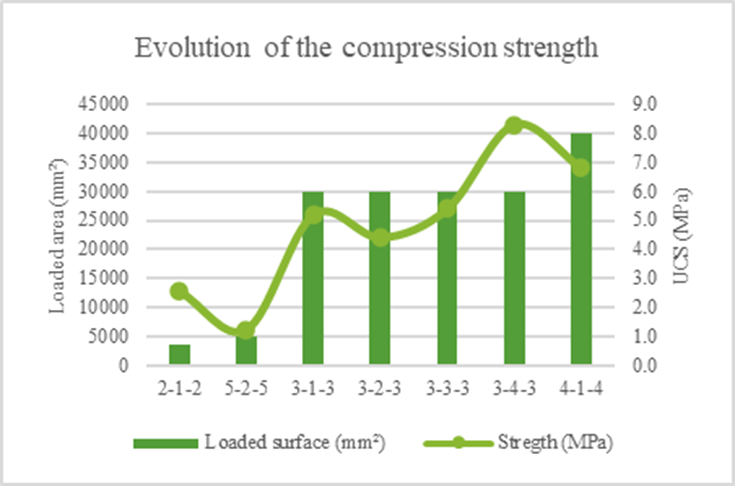
To accentuate the trend, Figure 9 has been provided, specifically for the quarries under study in this paper.
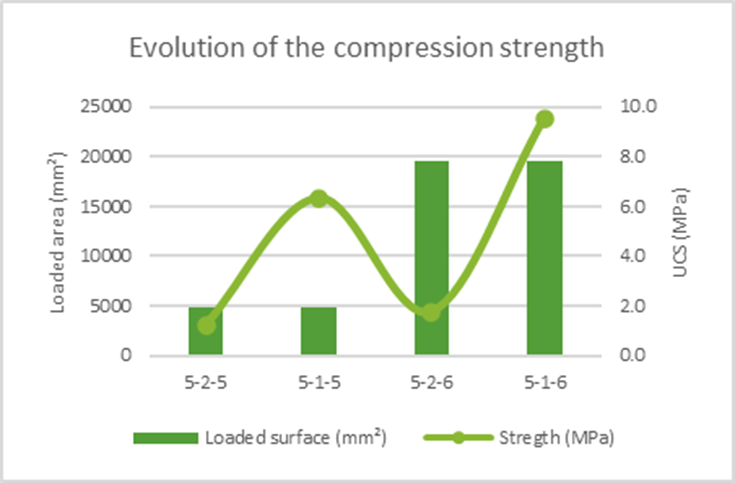
As demonstrated in Figures 8 and 9, it can be readily deduced that the UCS, expressed as the load-bearing capacity (N=Newton) per unit area (mm²=square millimeters), exhibits a direct correlation between the loaded area and its estimated load-bearing capacity. This phenomenon can be attributed to the macroporous nature of the laterite stone. The evaluation is conducted with the objective of determining the most suitable dimension for assessing the load-bearing capacity of stone masonry units, such as LS. A salient point of discussion is the marked increase in hardness of the LS from MENA quarries in comparison to the two other quarries. This phenomenon elucidates the observed discrepancy in the values of UCS for samples of equivalent size. As Lawane Gana (2014) has previously indicated,
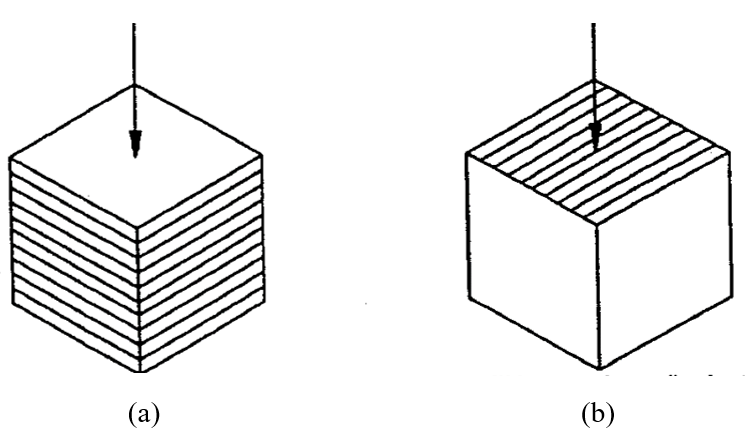
Given the potential uncertainty surrounding the bedding plan, particularly with regard to the laterite stone that is extracted manually, it is imperative to investigate the variation in compressive strength in relation to the loading plan. As demonstrated by Hu et al. (2017), the loading of bricks in a plan parallel to the bedding pan of laterite has been shown to result in higher compressive strength values than those obtained with a perpendicular loading. Analogous conclusions could be extrapolated to laterite stone, as evidenced by the findings presented in Nasheed et al. (2018) study.
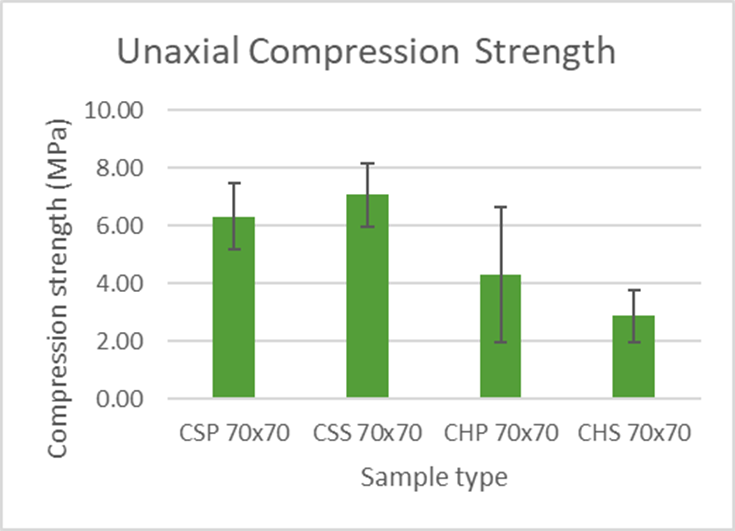
CSP refers to compression tests conducted with the load applied perpendicular to the bedding plane in the dry state, while CSS denotes compression tests with the load applied parallel to the bedding plane under the same dry conditions. In the case of saturated specimens, CHP represents compression with the load applied perpendicular to the bedding plane, whereas CHS corresponds to compression with the load applied parallel to it.
As demonstrated in the study by Nasheed et al. (2018), it is evident that loading the LS in the plan parallel to the plan of anisotropy results in higher values of resistance. The same conclusion is reached in both the dry and saturated states, although it is much less perceptible in the saturated state, as evidenced by the standard deviation values. It is also important to note that approximately 50% of the compression strength is lost from the dry state to the saturated state. This observation is corroborated by the findings reported in Lawane Gana (2014) and Nasheed et al. (2018).
As illustrated in Figure 10, the compressive and flexural tensile strength values of the LS from MENA quarries of DANO are summarized. This phenomenon has been observed in other quarries as well. However, it is noteworthy that LS from mechanical extraction sites exhibits higher strength compared to that from manual extraction sites. The prevailing evidence suggests that manual extraction quarries prioritize the soft layer of stone. Repeated shocks have been demonstrated to create dynamic stresses and cracks in the LS. In the context of this study, LS from MENA quarries exhibit a higher degree of hardening compared to those from other quarries. As posited by Kasthurba et al. (2007, 2008), the chemical and mineral composition, as well as the molecular arrangement of the matrix, exert a significant influence on the mechanical properties.
As illustrated in Figure 11, the elastic modulus demonstrates a dependence on the standard, the hydric state, the sample size, and the loading pan. It is important to note that the elastic modulus is determined through compression loading, as outlined in the European standard. Similarly, the same physical value is determined through a bending test, as specified in ASTM C1352. It is imperative to acknowledge that the American standard stipulates that load-unload cycles should be conducted prior to the attainment of the breaking point. This approach does not align with the European standard.
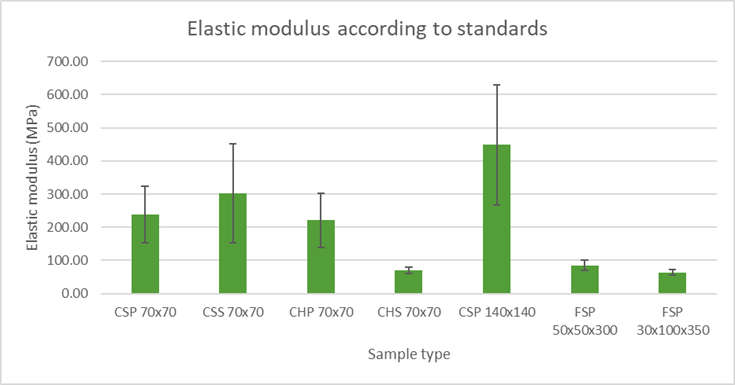
FSP signifies bending tests conducted in a dry state with the application of load perpendicular to the bedding plane.
It is evident that the value of the elastic moduli is influenced by the water content rate of the LS, the dimensions of the sample, and the type of test conducted. The values communicated here are given for the MENA quarry. For other quarries, the values are approximately 30% lower than those for the MENA quarry. The chemical and mineralogical properties of the studied laterite may provide a rationale for this trend.
The LS under consideration in this paper exhibits analogous properties to those reported in the Indian studies by Kasthurba et al. (2007, 2008). The observed variation can be attributed to the difference in size of the samples that were studied. As Hendry and Malek (1986) have demonstrated, the dimensions of the blocks utilized as masonry units have a significant impact on the behavior of masonry structures. The objective is to utilize LS as safe masonry units. Therefore, it is imperative to ensure the accuracy of the values entered as parameters in models.
The size-dependent behavior of unconfined compressive strength (UCS) in lateritic stones underscores a scale effect that is commonly observed in porous geomaterials. This phenomenon, in which larger specimens exhibit higher relative bearing capacity per unit area, can be attributed to the heterogeneous distribution of macro-pores and micro-fissures within the stone matrix. In smaller samples, localized weaknesses such as voids or clay-rich zones are more likely to dominate failure modes, leading to premature cracking and lower UCS values. In contrast, larger blocks enable stress redistribution across a more extensive area, thereby mitigating the influence of isolated defects and enhancing load-bearing performance. This phenomenon aligns with the broader literature on rock mechanics, where the representative elementary volume (REV) concept posits that mechanical properties stabilize only beyond a certain sample scale. In the case of laterite stones from Burkina Faso quarries, such as those in Dano2, the macro-porous structure that frequently results from pedogenic processes involving iron oxide cementation serves to amplify this effect. A review of comparative studies on similar materials, including those from Indian laterites, reveals that UCS values range from 1.5 to 5 MPa for small cubes (50 mm side) and from 3 to 7 MPa for larger prisms (200–300 mm). These findings underscore the necessity for standardized testing protocols that take specimen geometry into account (Bhat et al., 2024).
Furthermore, the induration level of lateritic stones plays a pivotal role in UCS variability across quarries. The MENA quarry samples, distinguished by elevated levels of ferruginous cementation, demonstrate UCS values that are up to 30-50% higher than those observed in less indurated sites, such as Diebougou. This disparity can be attributed to the mineralogical composition, wherein the goethite and hematite phases provide robust binding, thereby enhancing resistance to compressive forces. This assertion is corroborated by Lawane Gana (Lawane Gana, 2014), who notes that quarries with deeper weathering profiles yield more durable stones due to prolonged exposure to sesquioxide precipitation. The extraction methods employed have been identified as a contributing factor to these disparities. Manual quarrying, a prevalent practice in artisanal operations, has been shown to introduce micro-cracks through the impact of hammers and the selective removal of softer layers. This process can lead to a reduction in overall strength of the material. Conversely, mechanical extraction maintains the integrity of harder horizons, yielding stones with superior mechanical properties. This has implications for masonry applications, where inconsistent stone quality can lead to differential settlement or failure in load-bearing walls. To mitigate this, quality control measures, such as non-destructive ultrasonic pulse velocity testing, could be implemented at quarry sites to classify stones based on induration indices.
The transition to the anisotropic behavior of laterite stones is accompanied by a significant influence of the orientation of loading relative to bedding planes on compressive strength. Anisotropy in laterites is attributed to their sedimentary-volcanic origins, wherein the layered deposition of clay minerals and iron oxides gives rise to planes of weakness that are perpendicular to the bedding. It has been demonstrated that loading parallel to these planes (CSS and CHS configurations) generally results in higher UCS, a phenomenon attributed to the alignment of stress paths with the more robust matrix fabric. In contrast, perpendicular loading (CSP and CHP) has been shown to exploit interlaminar shear vulnerabilities. According to the findings of Nasheed et al. (2018), there is a 20-40% increase in strength for parallel loading in dry states. However, this premium decreases to 10-20% in saturated conditions due to the reduction in effective stress caused by pore water pressure. This moisture-induced anisotropy reduction is of particular significance in tropical climates such as Burkina Faso, where seasonal flooding can saturate building foundations, thereby compromising their structural integrity. Abhilash et al. (Abhilash et al., 2016) propose that anisotropy ratios (parallel/perpendicular strength) exhibit a correlation with clay content; higher kaolinite fractions have been observed to increase planar weaknesses, as evidenced in the case of softer Burkinabe laterites.
The significant effect of moisture content on UCS, with an estimated 50% strength reduction from dry to saturated states, demonstrates the hydro-mechanical coupling present in porous laterites. Water absorption, which frequently exceeds 15% by mass in these stones, results in the swelling of clay minerals, the accumulation of internal pressure, and the lubrication of fracture surfaces. This accelerates failure under load. As illustrated in Figure 10, dry UCS values for MENA samples averaged 4-6 MPa, dropping to 2-3 MPa when saturated. This finding aligns with global observations; for instance, studies on West African laterites report analogous reductions, attributing them to the dissolution of soluble salts and weakening of iron oxide bonds in wet environments. Such behavior necessitates design considerations for masonry in humid regions, including waterproofing coatings or elevated foundations to minimize saturation risks. Furthermore, flexural tensile strength demonstrates a parallel decline, as tensile stresses exacerbate crack propagation in water-weakened matrices, with values decreasing half at dry (0.5-1 MPa) and wet conditions.
Elastic modulus variations further elucidate the material’s response to environmental and testing factors. The modulus is determined via compression (European standards like EN 12390) or bending (ASTM C1352). This quantification of stiffness is crucial for predicting deformation in masonry assemblies. The load-unload cycles delineated in ASTM protocols have been observed to result in the initial microcrack closure, a phenomenon that has been shown to lead to an overestimation of modulus estimates by a factor of 10-20% in comparison to the more conventional monotonic European tests. The observed disparities among quarries, with MENA exhibiting 30% higher moduli, can be attributed to variations in mineralogy. The elevated ferrous content and reduced porosity present in MENA samples enhance elastic recovery. A comparison of the data with Indian laterites reveals analogous trends. However, the use of smaller cubes versus prisms in the samples introduces variability, thereby emphasizing the necessity of conducting REV-scale testing.
Conclusion
In summary, this study thoroughly investigates the potential of lateritic stones (LS) from selected quarries in Burkina Faso as viable construction materials, building upon prior research such as that by Lawane Gana (2014). The research endeavored to identify and sample quarries in the southwestern regions of Dano and Diébougou, as well as in the vicinity of Ouagadougou. These regions are distinguished by geological formations, including Birimian basement granitoids, post-Birimian dolerites, and Quaternary alluvium, which collectively contribute to the formation of reddish, indurated lateritic deposits. Samples were collected from three primary quarries (MENA [Dano 2], CERMA [Dano 1], and MALO [Diébougou]) employing both mechanical and artisanal extraction methods to assess their impact on material integrity. Laboratory analyses were conducted in accordance with ASTM and French standards (e.g., C170, C1352, NF EN 1926), encompassing the evaluation of pivotal physical and mechanical properties. These properties encompassed uniaxial compressive strength (UCS), flexural strength, Young’s modulus, and Poisson’s ratio. The laboratory analyses were executed under conditions that varied in terms of sample size, moisture content, and loading orientation relative to anisotropy planes. The findings indicated substantial influences: increased sample sizes led to enhanced relative bearing capacity due to stress redistribution in macro-porous structures; moisture saturation reduced ultimate compressive strength (UCS) by approximately 50% through clay swelling and pore pressure effects; parallel loading to bedding planes yielded higher strengths compared to perpendicular orientations, emphasizing anisotropy; and mechanical extraction produced superior stones compared to manual methods, which introduce micro-cracks. A comparative analysis of literature from India and other regions has highlighted the significance of mineralogical composition (e.g., goethite, hematite, kaolinite) and pedogenic processes in determining durability. Finally, the objective of his research is to promote LS as sustainable, locally sourced masonry units in Burkina Faso’s construction sector. This objective addresses challenges such as inconsistent quality and environmental factors. It also advocates for standardized testing and quality controls to ensure safe structural applications.
The key findings of this study can be summarized as follows:
Scale-Dependent Mechanical Behavior: The unconfined compressive strength (UCS) of lateritic stones demonstrates a conspicuous size effect, wherein larger specimens exhibit higher load-bearing capacity per unit area. This phenomenon is attributed to the heterogeneous macro-porous nature of LS, which facilitates enhanced stress distribution in larger blocks and mitigates localized defects. For instance, UCS values increased from smaller 70 mm cubes to 140 mm ones, aligning with literature trends in porous geomaterials. This finding underscores the necessity for standardized sample dimensions in testing protocols to ensure precise prediction of performance in masonry structures. Smaller samples have the potential to underestimate real-world strength, which could result in over-conservative designs or material wastage.
The Impact of Extraction Methods on Stone Quality: Mechanical extraction, as observed in the MENA quarry, yields more indurated and durable LS compared to the artisanal manual methods prevalent in CERMA and MALO quarries. Manual processes, involving repetitive impacts and the targeted removal of softer layers, result in the formation of micro-cracks and can lead to a decrease in the overall UCS by up to 30-50%. From a pragmatic standpoint, the promotion of mechanized quarrying in Burkina Faso holds the potential to enhance material consistency, reduce defects, and improve the suitability of the quarried materials for load-bearing walls. This approach would also serve to minimize labor-intensive risks and environmental degradation from inefficient operations.
Anisotropy and Loading Orientation Effects: Lateritic stones exhibit substantial anisotropy, a consequence of the layered deposition of clays and iron oxides. Load application parallel to bedding planes (CSS/CHS) results in UCS values 20-40% higher than those perpendicular to bedding planes (CSP/CHP). This effect is mitigated in saturated conditions but remains significant, as perpendicular loading exploits interlaminar weaknesses. In masonry, improper orientation has been shown to accelerate failure under compressive or shear stresses. Therefore, guidelines for builders should include visual or ultrasonic assessments to align stones optimally, enhancing structural stability in anisotropic materials like LS.
Moisture Sensitivity and Hydro-Mechanical Coupling: A salient vulnerability of LS is the substantial strength loss experienced around 50% in UCS and flexural tensile strength upon saturation. This phenomenon can be attributed to the water-induced swelling of clays, the lubrication of fractures, and the reduction in effective stress. The dry state values for MENA samples (4-6 MPa UCS) decreased to 2-3 MPa when wet, which is consistent with observations in West African and Indian laterites. This hydro-mechanical behavior, exacerbated in tropical climates with seasonal rains, poses risks for foundations and walls in humid environments. Mitigation strategies, including the application of waterproof coatings, the elevation of structures, and the incorporation of drainage systems, are imperative. Additionally, the elastic modulus exhibits a comparable decline in response to moisture, thereby impacting the accuracy of deformation predictions. Consequently, there is a compelling rationale for prioritizing standards that incorporate wet-state testing, ensuring the resilience of designs in variable weather conditions.
The following investigation will explore the mineralogical and geological influences on properties. The variations in mechanical properties observed across quarries are attributable to geological origins and mineral composition. Specifically, the higher induration observed in MENA is linked to ferruginous cementation from goethite and hematite in Birimian formations. Conversely, less indurated sites such as Diébougou exhibit reduced UCS and modulus (30% decreased), influenced by shallower weathering and elevated clay fractions. This underscores the value of site-specific characterizations. To ensure sustainable use, it is essential that quarries be mapped for induration indices, and that chemical analyses be integrated into quality assurance programs. A comparative analysis of global studies suggests that Burkina Faso’s LS has the potential to rival Indian counterparts in terms of its capabilities. However, the development of customized models that account for local pedogenesis is essential for conducting accurate engineering simulations.
Implications for Sustainable Construction Practices: In summary, LS from Burkina Faso quarries presents a promising eco-friendly alternative to imported materials, exhibiting UCS and flexural strengths suitable for low-rise masonry applications (e.g., 3-7 MPa range for larger blocks). However, challenges such as size effects, moisture sensitivity, and extraction inconsistencies must be addressed through non-destructive testing methods, including ultrasonic pulse velocity, and standardized protocols. The study emphasizes the utilization of representative elementary volume (REV) in evaluations and the promotion of mechanized methods. It advocates for policy reforms to integrate LS into national building codes, with the objective of reducing costs, carbon footprints, and reliance on non-renewable resources. Future research could explore treatments like stabilizers to enhance water resistance, further unlocking LS’s potential in resilient, affordable housing amid climate change pressures.
In summary, the properties of laterite make it a viable and sustainable masonry unit, provided that anisotropy, moisture, and scale effects are accurately modeled. Future research endeavors should integrate finite element simulations to predict masonry behavior under combined thermo-hydro-mechanical loads. This will ensure safe integration in modern construction while leveraging their environmental benefits, such as low embodied energy and local availability. This comprehensive understanding serves to fill the existing gaps in the relevant literature by advocating for the implementation of standardized guidelines in regions that are dependent on vernacular materials.
Declarations
Authors’ Contributions
H.S.M: Methodology, Software, Formal analysis, Investigation, Data curation, Writing of the original draft, Writing – review & editing.
A.L: Conceptualization, Methodology, Validation, Formal analysis, Resources, Writing – review & editing, Supervision, Funding acquisition.
D.D.D: Conceptualization, Methodology, Validation, Writing of the original draft, Writing – review & editing.
Conflict of Interest
The authors declare that they have no known competing financial interests or personal relationships that could have appeared to influence the work reported in this paper.
Funding
Funding for this project was provided by the World Bank (African Higher Education Centers of Excellence at 2iE Institute, Burkina Faso – College of Engineer program).
Declaration on the Use of Generative AI and AI-Assisted Technologies
No generative AI or AI-assisted technologies were used in the preparation of this manuscript.
Data Availability
The data that support the findings of this study are available from the corresponding author upon reasonable request.
Acknowledgement
The authors sincerely acknowledge the financial support provided by the World Bank through its African Higher Education Centers of Excellence project at the 2iE Institute, Burkina Faso, under the College of Engineer program.
Ethics
This study did not involve human participants or animals; hence, no ethical approval was required.
References
- Abhilash, H. N., McGregor, F., Millogo, Y., Fabbri, A., Séré, A. D., Aubert, J. E., & Morel, J. C. (2016). Physical, mechanical and hygrothermal properties of lateritic building stones (LBS) from Burkina Faso. Construction and Building Materials, 125, 731–741. https://doi.org/10.1016/j.conbuildmat.2016.08.082
- ASTM-C170/C170M-17. (2017). Standard Test Method for Compressive Strength of Dimension Stone (US Department of Defense, Ed.; ASTM). https://doi.org/10.1520/C0170_C0170M-17
- Babu, B. R., Dinesh Kumar, G., & Tech, M. (2007). International Journal of Innovative Research in Science, Engineering and Technology (An ISO), 3297(1). https://doi.org/10.15680/IJIRSET.2017.0601130
- Benon, E., Atiah, E. A., Githuku, C., & Mwai, M. (2025). Assessment of wormhole concretionary laterite stone for use in masonry construction. Journal of the Ghana Institution of Engineering (JGhIE), 25(2), 69–76.
- Bhat, D. K., Kamath, K., Banerjee, S., Bhat P, K., & Isleem, H. F. (2024a). Mechanical properties and microstructural analysis of laterite stone masonry from India for sustainable construction. Discover Materials, 4(1), 91. https://doi.org/10.1007/s43939-024-00160-z
- Bhat, D. K., Kamath, K., Banerjee, S., Bhat P, K., & Isleem, H. F. (2024b). Mechanical properties and microstructural analysis of laterite stone masonry from India for sustainable construction. Discover Materials, 4(1), 91.
- Castaing, C., Billa, M., Milesi, J. P., Thieblemont, D., Le Metour, J., Egal, E., Donzeau, M., Guerrot, C., Cocherie, A., & Chevremont, P. (2003). Notice explicative de la carte géologique et minière à 1/1 000 000 du Burkina Faso. Ouagadougou, Burkina Faso, 58.
- Dsouza, E., & Dileep Kumar, U. (2017). A study on laterite stones as building material.
- EN 1926. (1999). Méthodes d’essai pour pierres naturelles – Détermination de la résistance en compression.
- Hendry, A. W., & Malek, M. H. (1986). Characteristic compressive strength of brickwork walls from collected test results. MASONRY INT. Masonry Int., (7), 15.
- Hu, S., Tan, Y., Zhou, H., Guo, W., Hu, D., Meng, F., & Liu, Z. (2017). Impact of bedding planes on mechanical properties of sandstone. Rock Mechanics and Rock Engineering, 50(8), 2243–2251.
- IS : 1121. (1974). Methods of Test for Determination of Strength Properties of Natural Building Stones Part I: Compressive Strength (Bureau of Indian Standards, Ed.). BIS.
- KABORE, M., LAWANE, A., SAWADOGO, C., LO, M., MESSAN, A., & PANTET, A. (2019). Études expérimentales du comportement mécanique sous charges verticales des maçonneries en Blocs de Latérite Taillée (BLT). Afrique SCIENCE, 15(1), 201–213.
- Kapadia, S. (2025). Comparative of Two Building Envelopes for Energy Efficiency and Environmental Sustainability. Current World Environment, 20(1), 418.
- Kasthurba, A. K., Santhanam, M., & Achyuthan, H. (2008). Investigation of laterite stones for building purpose from Malabar region, Kerala, SW India – Chemical analysis and microstructure studies. Construction and Building Materials, 22(12), 2400–2408. https://doi.org/10.1016/j.conbuildmat.2006.12.003
- Kasthurba, A. K., Santhanam, M., & Mathews, M. S. (2007). Investigation of laterite stones for building purpose from Malabar region, Kerala state, SW India – Part 1: Field studies and profile characterisation. Construction and Building Materials, 21(1), 73–82. https://doi.org/10.1016/j.conbuildmat.2005.07.006
- Kirtschigg, K. (1985). On the failure mechanism of masonry subject of compression. Proceedings of 7th International Brick Masonry Conference, Melbourne, 625–629.
- Krishna, P. S., Poongodi, K., Kumar, P. R., & Murthi, P. (2024). A review on investigations of novel nano-silica based mortar for the repairing of heritage buildings. AIP Conference Proceedings, 3122(1), 070019.
- Ladmirant, H., & Legrand, J. M. (1977). Notice explicative de la carte géologique au 1/200000 de la feuille de Houndié. De La Géologie et Des Mines, Haute Volta, Ouagadougou.
- Lawane, A., Pantet, A., Messan, A., Vinai, R., & Thomassin, J. H. (2013). Conception d’éco-habitats en Blocs de Latérite Taillés au Burkina Faso (2iE, Ed.; pp. 1–10). www.2ie-edu.org
- Lawane, A., Pantet, A., Vina, R., & Thomassin, J. H. (2011). ÉTUDE GÉOLOGIQUE ET GÉOMÉCANIQUE DES LATÉRITES DE DANO (BURKINA FASO) POUR UNE UTILISATION DANS L’HABITAT. Annales Du Bâtiment et Des Travaux Publics, (6), 15.
- Lawane Gana, A. (2014). Caractérisation des matériaux latéritiques indurés pour une meilleure utilisation dans l’habitat en Afrique [Thèse de doctorat]. UNIVERSITÉ DU HAVRE.
- Lekjep, R. S., Kagai, K. J., Chong, J. D., & Baji, J. A. (2024). Improving Thermal and Energy Performance of Residential Buildings in Nigeria by Developing and Using Eco-Friendly and Sustainable Local Materials. BIMA Journal of Science and Technology (2536-6041), 8(1B), 157–169.
- Mann, W. (1982). Statistical evaluation of tests on masonry by potential functions. Sixth International Brick Masonry Conference.
- Mann, W., & Muller, H. (1982). Failure of shear-stressed masonry. An enlarged theory, tests and application to shear walls. Proc. Br. Ceram. Soc., (30), 223.
- Molla, M., Birhanu, Y., Alene, M., Berhane, G., Mengesha, H., Resom, A., & Asrat, A. (2024). Geological and Geotechnical Properties of the Rock-hewn Churches of Hawzien-Ger’alta, Tigrai, Northern Ethiopia: Implications for Their Conservation. Geoheritage, 16(4), 140.
- Nasheed, M., Junaid Mk, M., Sreevidya, V., & Preethi, R. (2018). Case Study on Comparison between Laterite Stone and Concrete Block, 81–88. https://www.researchgate.net/publication/327282310
- Netterberg, F. (2025). What’s in a name: laterite, plinthite, ferricrete, pedocrete, geocrete and duricrust – is there any difference, and is it of any engineering significance?
- Pratheeksha, V. G., & Umaraniya, S. (2025). Role of Construction Methods in Shaping Neo-Vernacular Architecture: Insights from the Master Builder Nari Gandhi in India.
- Rodrigues, A. N. A. S. (2025). Architecture as Identity: Preserving Goan Vernacular in the Age of Globalization. AIJFR-Advanced International Journal for Research, 6(5).
- Thamboo, J., Corradi, M., & Poologanathan, K. (2024). Investigating the mechanical characteristics of unreinforced and reinforced stone masonry using an experimental database. Bulletin of Earthquake Engineering, 22(4), 2173–2199.
- Xie, L., Hu, X., Chen, Z., Cai, W., Zhang, W., Hu, Y., & Zeng, Z. (2024). Natural materials modified mud mortar for rubble stone masonry: An experimental and numerical study. Case Studies in Construction Materials, 21, e04086.
Copyright © 2026 by the authors. Licensee Scientific Steps International Publishing Services, Dubai, UAE.
This article is an open access article distributed under the terms and conditions of the
Creative Commons Attribution (CC BY) 4.0 license.